Provincial Flowers of Atlantic Canada: The Official Floral Emblems of the Maritimes
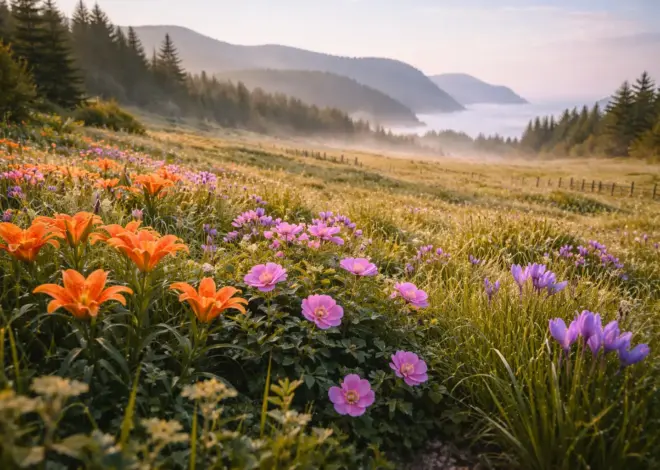
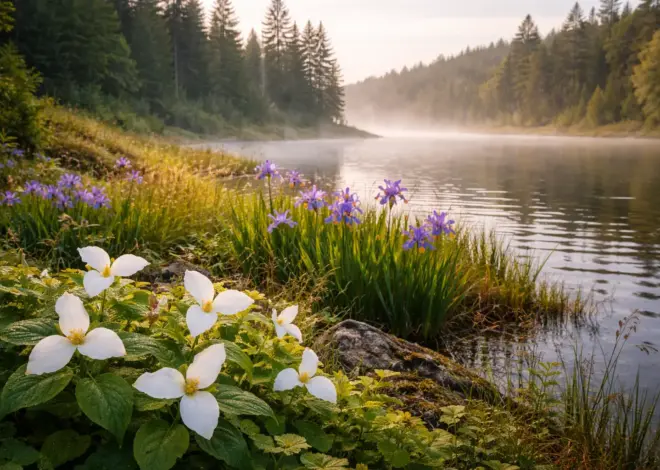
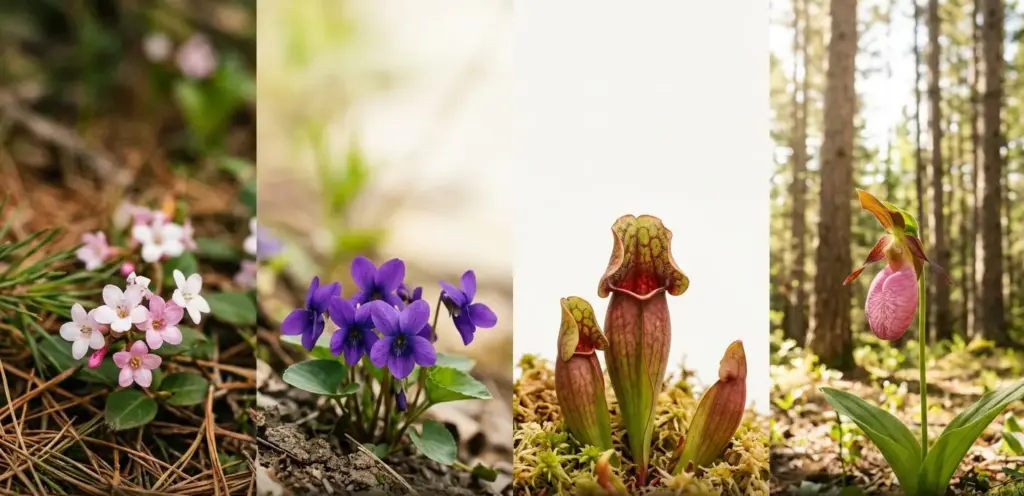
The provincial flowers of Atlantic Canada represent a diverse botanical collection consisting of the Mayflower (Nova Scotia), the Purple Violet (New Brunswick), the Pitcher Plant (Newfoundland and Labrador), and the Pink Lady’s Slipper (Prince Edward Island). These resilient species don’t just decorate the landscape; they’re legally protected symbols that reflect the rugged coastal history and specific soil chemistry of the Canadian Maritimes.
Atlantic Canadian floral emblems represent post-glacial resilience, transitioning from mere botanical ornaments to legal symbols.
The Unique Botanical Landscape of Atlantic Canada
Exploring the Atlantic provinces flora requires a deep dive into the evolutionary history of the East Coast, which forms a vital chapter in the broader comprehensive study of Canadian native ecosystems and regional biodiversity. Exploring the Atlantic provinces flora requires a deep dive into the evolutionary history of the East Coast. These Canadian maritime flowers have developed unique biological mechanisms to survive in salt-misted corridors. The four provinces share a maritime influence, but their specific growing conditions vary wildly from the acidic bogs of the Rock to the red sandstone soil of the Island.
Coastal Climate and Soil Diversity
Atlantic Canada’s plant life survives in conditions that would kill off more “pampered” garden varieties. You’re looking at a range of pH levels from highly acidic (4.0 in peat bogs) to more neutral coastal loams. Regional biodiversity survives through acidic soil adaptation, not despite the harsh North Atlantic climate. The Atlantic Ocean acts as a massive thermal regulator, which means spring often arrives later than in Ontario, but the frost-free period can stretch longer into the autumn.
Climate Velocity and Hardiness Zone Shifts 2026
By 2026, data from the Canadian Plant Hardiness Project shows a significant northward shift in climate velocity. Historical zones 5a to 7b are transitioning, with northern New Brunswick and Labrador moving into 5b/6a territories. This rapid warming forces provincial flowers to adapt to shorter vernalization periods, making their preservation within stable microclimates more critical than ever before.
While these species define the eastern coast, they share a common thread of survival with the resilient flora of the high latitudes, where extreme cold shapes the natural heritage.
The Significance of Floral Emblems in Canadian Heritage
These flowers aren’t just random choices made by a committee; they’re baked into the local identity. Choosing a floral emblem was a way for these provinces to assert their unique character within the Canadian Confederation. The Mayflower signifies Nova Scotian historical endurance, blooming through spring snow rather than waiting for warmth. They represent survival, beauty in harshness, and a deep-seated connection to the land that predates modern urbanization.
Traditional Ecological Knowledge (TEK) Integration
The significance of these emblems is deeply rooted in the Traditional Ecological Knowledge (TEK) of the Mi’kmaq and Wolastoqiyik peoples. Long before official adoption, these nations utilized these species not as static symbols, but as seasonal indicators and medicinal resources. Recognizing this heritage is now a standard requirement for federal conservation frameworks in 2026.
“The choice of a floral emblem is a reflection of a province’s soul. It tells a story of the people’s resilience and their intimate relationship with the natural world around them.” — Dr. Marian Munro, Botanist and Curator Emeritus at the Nova Scotia Museum.
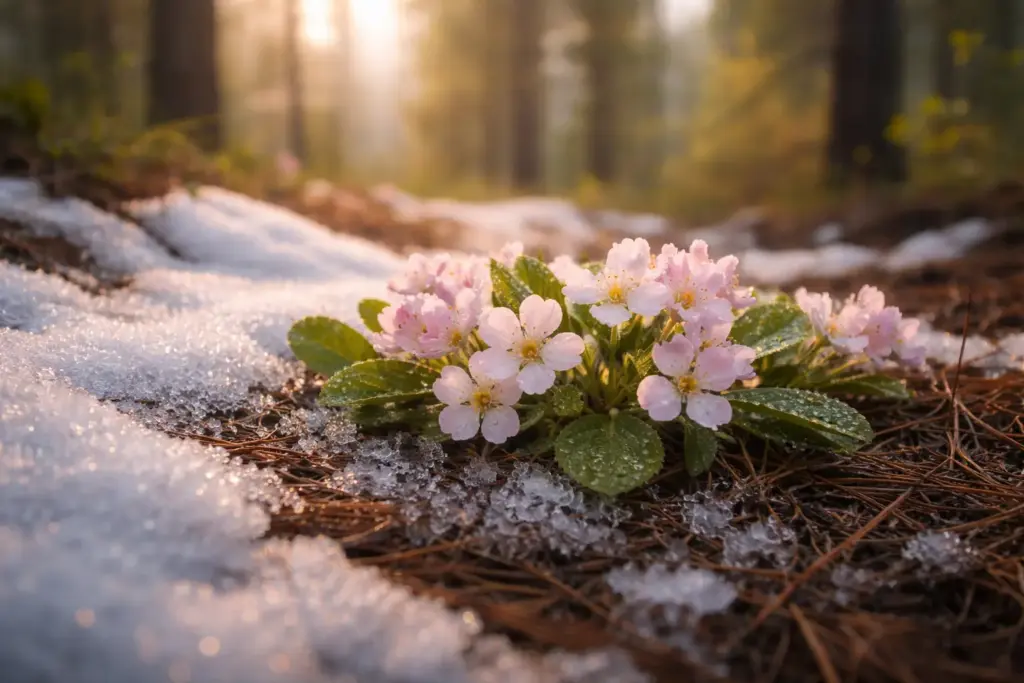
Nova Scotia Provincial Flower: The Mayflower (Epigaea repens)
Nova Scotia’s choice of the Mayflower was a nod to both the literal flower that blooms in the tracks of receding snow and the historical ship that brought early settlers. It’s a low-growing woody shrub that doesn’t demand attention but commands respect from those who know where to look.
Historical Roots and Symbolism
The nova scotia provincial flower selection process in 1901 was the first of its kind in the country. As the premier official floral emblems Canada started to recognize, the Mayflower set a high bar for symbolic botanical representation. It appeared on the province’s stamps and coins as early as the mid-1800s. For Nova Scotians, the flower represents the first sign of life after a brutal North Atlantic winter.
Botanical Profile and Habitat
If you’re hunting for Epigaea repens, don’t look up. This plant hugs the ground in well-drained, acidic woodlands. Epigaea repens thrives in acidic pine barrens, demanding specific fungal symbiosis over standard garden nutrients. It’s part of the heath family, which means it thrives in the company of pine trees and blueberries. The flowers are small, waxy, and range from pure white to a delicate pink.
Threats from Invasive Glossy Buckthorn
According to the Nature Conservancy of Canada (2022), habitat fragmentation in the Acadian Forest has reduced Mayflower density by 15%. A major driver is the encroachment of Glossy Buckthorn (Frangula alnus), an invasive species that alters the soil chemistry and shades out the low-growing Mayflower, disrupting its access to early spring sunlight.
New Brunswick Provincial Flower: The Purple Violet (Viola cucullata)
New Brunswick’s floral emblem is often misunderstood as a common garden weed, but the Viola cucullata is a sophisticated wetland specialist.
Viola cucullata dominates New Brunswick’s wetlands, prioritizing saturated alluvial soils over well-drained terrestrial environments.
Why the Purple Violet Represents New Brunswick
Identifying the new brunswick provincial flower means looking for resilience in the mud. The Purple Violet was chosen precisely because its widespread presence throughout the Saint John River Valley made it the people’s choice in 1936. It’s a plant that’s equally at home in a manicured lawn or a wild marsh. This versatility mirrors the New Brunswick identity—a blend of agricultural roots and industrial grit.
Distinguishing Features of the Marsh Blue Violet
Don’t confuse the official new brunswick provincial flower with the common wood violet. The Viola cucullata, also known as the Marsh Blue Violet, specifically prefers “wet feet.” You’ll find it in meadows, near springs, and along the banks of the Saint John River. Its flowers are a deep, saturated violet with a distinctive “bearded” throat.
Phenology Shifts and Pollinator Mismatch
Research from the University of New Brunswick (2024) indicates that Viola species are blooming an average of 4.2 days earlier. This shift risks a pollinator mismatch, where the violets bloom before their primary insect partners have emerged from dormancy, potentially impacting the seed set for future generations.
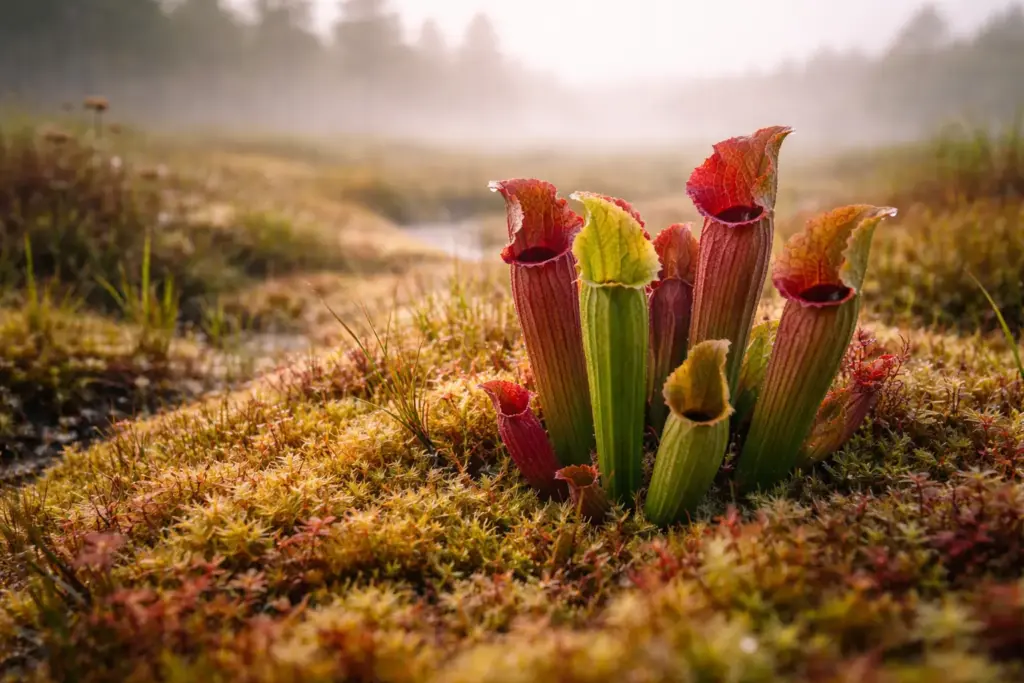
Newfoundland Provincial Flower: The Pitcher Plant (Sarracenia purpurea)
Newfoundland and Labrador went in a completely different direction by choosing a carnivorous plant as its emblem. The Pitcher Plant is a perfect metaphor for a province known for its “unique” culture and unforgiving geography.
The Carnivorous Symbol of Newfoundland and Labrador
The history of the newfoundland provincial flower is tied to royal recognition and rugged survival. Queen Victoria originally chose the Pitcher Plant for the Newfoundland penny in the 1800s, but it wasn’t officially adopted until 1954.
Newfoundland’s Pitcher Plant acts as an ecological specialist, converting environmental scarcity into predatory advantage.
Biology of a Hunter: How the Pitcher Plant Thrives in Bogs
The Sarracenia purpurea lives in peat bogs where nitrogen is almost non-existent. Sarracenia purpurea replaces soil-based nitrogen with insect digestion, evolving carnivory to colonize nutrient-poor sphagnum bogs. To survive, it evolved modified leaves that form deep “pitchers.”
To truly understand the rugged spirit of the Maritimes, you have to see its flora in action. Check out this incredible footage of the Pitcher Plant—Newfoundland’s carnivorous icon—thriving in the heart of Gros Morne National Park. It’s a masterclass in adaptation.
The Role of Community Science (iNaturalist)
In 2026, much of the tracking of the newfoundland provincial flower is performed via citizen science platforms like iNaturalist, allowing botanists to monitor the health of remote bog colonies through real-time user uploads. This data has helped maintain populations in over 90% of protected areas.
Prince Edward Island Provincial Flower: The Pink Lady’s Slipper (Cypripedium acaule)
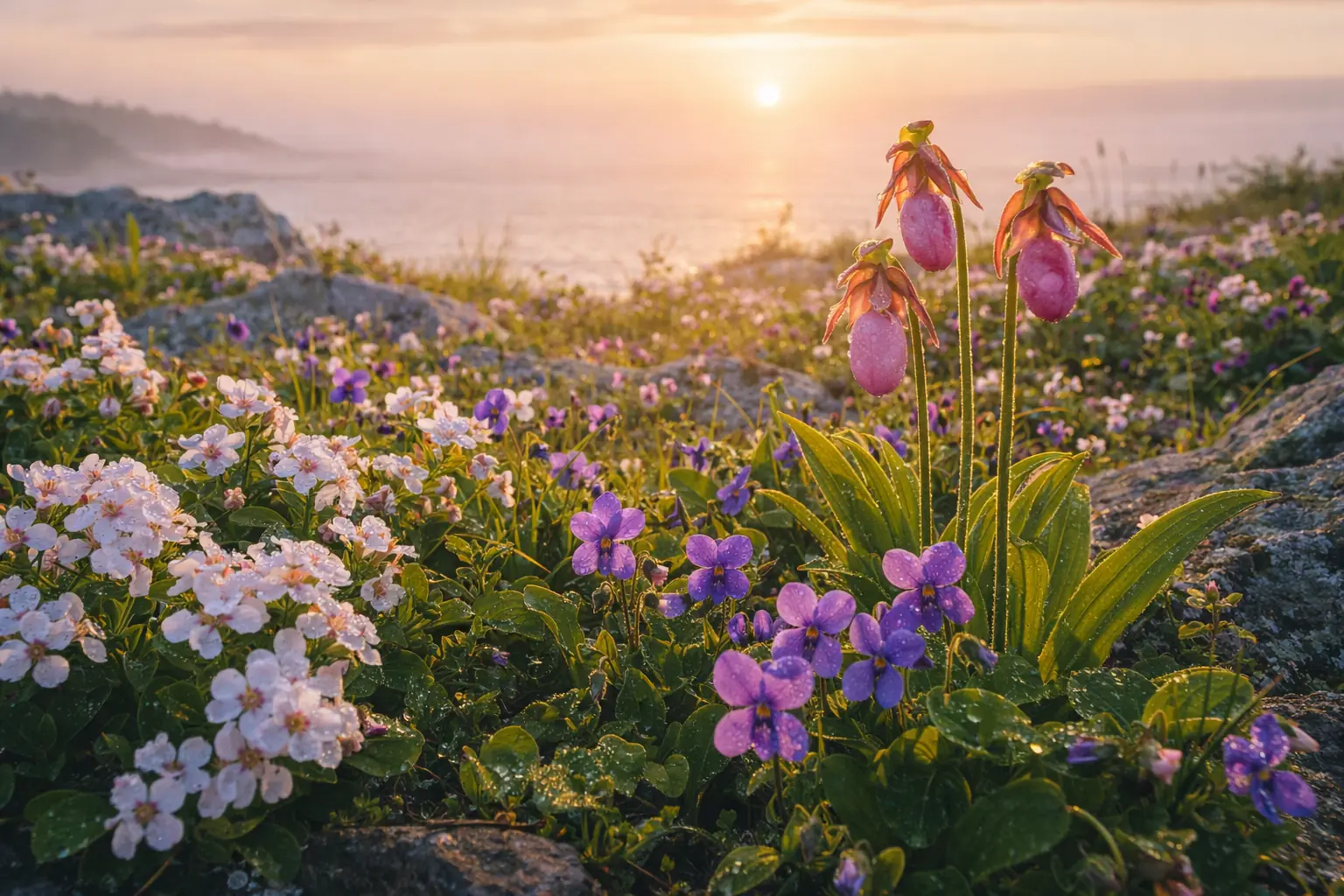
Prince Edward Island is home to the Pink Lady’s Slipper, a stunning wild orchid that looks like it belongs in a tropical rainforest. It was adopted in 1947 and has since become one of the most recognizable symbols of the Island’s natural beauty.
PEI’s Rare Orchid: Cultural and Legal Protection
Locating the prince edward island provincial flower in the wild is a rewarding challenge for any botanist. This rare orchid is the crown jewel of the island’s conservation efforts. Cypripedium acaule relies on Rhizoctonia fungi for survival, making PEI’s orchid biologically impossible to domesticate. This dependency on mycorrhizal networks means that if you move the plant, it loses its nutrient lifeline and will die.
Federal Protection under SARA
While provincial fines range from $500 to $2,500, the prince edward island provincial flower also benefits from the federal Species at Risk Act (SARA) when found on federal lands. This dual layer of protection ensures that PEI’s “orchid of the woods” remains a centerpiece of the Island’s biodiversity strategy.
Bloom Season and Identification
The Pink Lady’s Slipper blooms in late May to late June. It features two large, basal leaves and a single flower stalk topped with a large, pouch-like petal. This “pouch” is the “slipper.” It’s designed to trap bees—specifically queen bumblebees (Bombus spp.)—temporarily, forcing them to brush against the pollen as they find their way out.
Comparison of Atlantic Provincial Flowers
| Province | Floral Emblem | Scientific Name | Year Adopted | Typical Habitat |
| Nova Scotia | Mayflower | Epigaea repens | 1901 | Acidic Woodlands |
| New Brunswick | Purple Violet | Viola cucullata | 1936 | Wet Meadows/Marshes |
| Newfoundland | Pitcher Plant | Sarracenia purpurea | 1954 | Sphagnum Bogs |
| P.E.I. | Pink Lady’s Slipper | Cypripedium acaule | 1947 | Shaded Pine Forests |
Summary of Atlantic Canada’s Floral Symbols
Maritime floral conservation shifts from passive observation to active legal protection of specialized coastal niches.
Reviewing the provincial flowers of Atlantic Canada reveals a shared theme: these aren’t just decorative items. They’re hardy survivors representing the environmental realities of life on the edge of the continent.
Safe Viewing: Public Botanical Collections
If you want to observe these species without risking a fine or damaging fragile ecosystems, visit these managed botanical collections.
| Province | Botanical Garden / Site | Key Species on Display | Approximate GPS Coordinates |
| Nova Scotia | Annapolis Royal Historic Gardens | Mayflower (Epigaea repens) | 44.7411° N, 65.5135° W |
| New Brunswick | Kingsbrae Garden (St. Andrews) | Purple Violet (Viola cucullata) | 45.0764° N, 67.0544° W |
| Newfoundland | MUN Botanical Garden (St. John’s) | Pitcher Plant (Sarracenia purpurea) | 47.5645° N, 52.7561° W |
| P.E.I. | Macphail Woods Ecological Centre | Pink Lady’s Slipper (Cypripedium) | 46.1283° N, 62.9033° W |
The provincial flowers of Atlantic Canada are far more than static historical markers; they are living testaments to the region’s ecological tenacity. By understanding the delicate balance between their specialized biology and the shifting maritime climate, we ensure these emblems endure. Protecting the provincial flowers of Atlantic Canada today means preserving the vibrant, rugged character of the Maritimes for generations to come—one bloom at a time.
To make your botanical expedition truly unforgettable and environmentally responsible, we have prepared a specialized guide. Use this official protocol to locate and document the provincial flowers of Atlantic Canada while adhering to federal conservation standards. Download the checklist below to carry it on your mobile device during your field trips.

FAQ
Can I pick the provincial flowers in Atlantic Canada?
No, unless you’re on your own private property and the species isn’t locally endangered. Flowers like the Pink Lady’s Slipper have complex root systems that make them nearly impossible to move without killing the plant.
What is the oldest provincial flower in the Maritimes?
The Mayflower of Nova Scotia holds the title. It was officially adopted in 1901, making it the first provincial floral emblem in all of Canada.
Are these flowers native to Canada?
Yes, but with a catch. Atlantic provincial flowers are bio-indicators of soil pH stability and regional climate shift thresholds. While they’re all native, their ranges vary significantly across the North American continent.
When is the best time to see the provincial flowers in bloom?
The window is tight. For the full “circuit,” you’d want to visit between May 15th and June 15th.
How can I help protect these flowers?
Use the iNaturalist app to record sightings without disturbing the plants. This data helps the Canadian Wildlife Service monitor population health and map the spread of invasive species like Glossy Buckthorn.
Sources
- Nature Conservancy of Canada. (2022-2023). Annual Report: Rolling back the tide of habitat loss and ecosystem degradation.
- University of New Brunswick. (2024). Climate Change Action Plan and Sustainability Report 2023–2024.
- Government of Newfoundland & Labrador. (2021). Environmental Protection Guidelines for Forestry Operations: Sustainable Use and Biodiversity Conservation.
- Munro, M. C., Newell, R. E., & Hill, N. M. (2020). Nova Scotia Plants: A Comprehensive Catalogue and Conservation Status. Nova Scotia Museum / Dalhousie University.
- Government of Canada. (2025). Species at Risk Act (SARA) Public Registry: Official Documents and Recovery Strategies.