Native Shrubs Ontario: Ultimate Garden Guide
Choosing the right native shrubs Ontario offers isn’t just about curb appeal; it’s about surviving a climate where temperatures swing from -30°C to +35°C. For homeowners, the “perfect” shrub is one that supports local pollinators while requiring zero chemical intervention. This guide breaks down the selection process by matching specific species to your backyard’s unique microclimate, ensuring your garden thrives without constant coddling.
Native shrubs Ontario aren’t decorative accessories; they’re essential ecological infrastructure for climate resilience.
Traditional landscaping consumes resources; native Ontario shrub habitats generate self-sustaining biological ecosystem services.
Best Indigenous Bushes for Local Gardens
The diverse geography of the province, stretching from the Carolinian forests in the south to the rocky Canadian Shield, means that native shrubs Ontario gardeners choose must be site-specific. You can’t just drop a moisture-loving bush into a sandy Windsor lot and expect it to survive August without a massive water bill.
Which varieties are top rated?
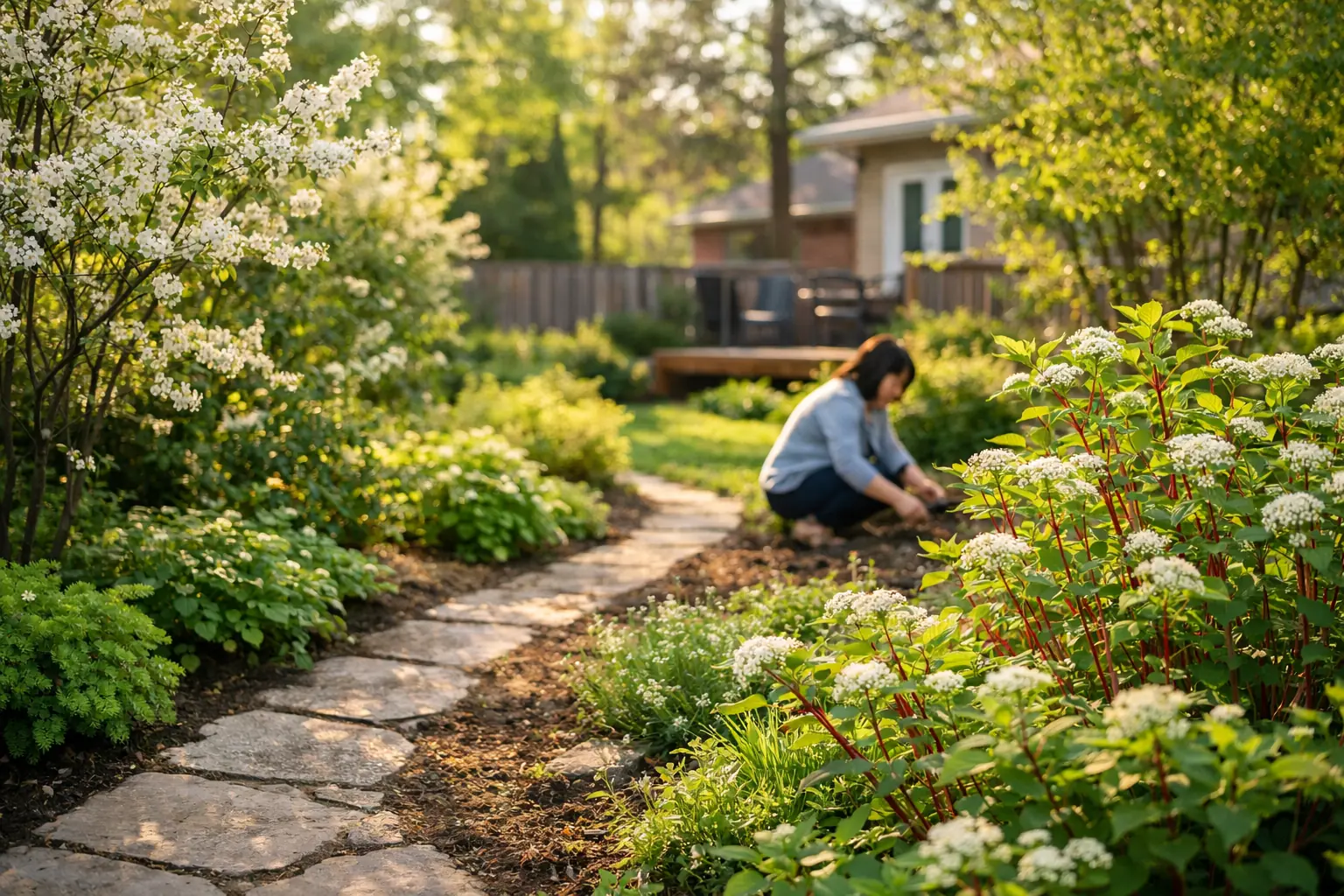
High-performance native shrubs Ontario enthusiasts often recommend start with the Serviceberry (Amelanchier). It’s a triple-threat: white spring blooms, edible summer berries, and fire-red autumn foliage. If you’re looking for wildlife support, the Red-osier Dogwood is unbeatable, especially for its striking red winter stems that pop against the snow. Elderberry (Sambucus canadensis) also ranks highly for those with enough space, as it can reach heights of 3 meters within just a few seasons.
Understanding Mycorrhizal Networks
Mycorrhizal networks function as biological internet, distributing nutrients between native root systems and soil fungi. To ensure these top-rated varieties survive the first year, you must respect the symbiotic relationship between roots and soil fungi. In Ontario’s undisturbed soils, native shrubs Ontario plants rely on a mycorrhizal network to transport phosphorus and water. When planting, avoid heavy tilling which shatters these microscopic bridges, and consider adding a native-sourced fungal inoculant to your backfill.
Aggressive tilling shatters soil biomes; undisturbed earth preserves vital mycorrhizal structures for plant longevity.
The Role of Specific Pollinators
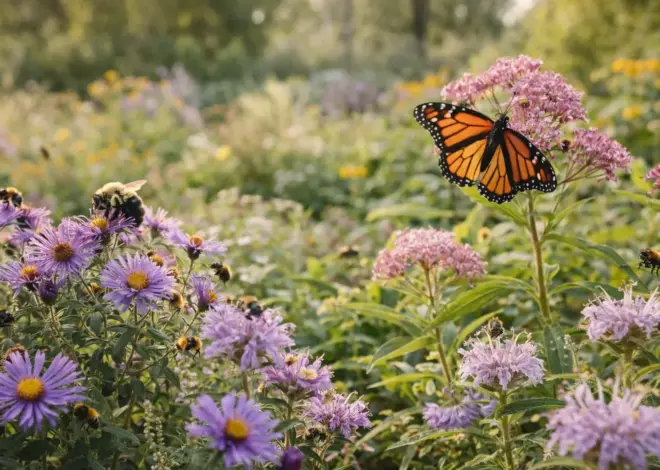
It’s not just about “bees.” Best native shrubs Ontario selections like the Spicebush are the sole host plant for the Spicebush Swallowtail butterfly. Similarly, the Serviceberry provides critical early-season nectar for Mining Bees (Andrena) before other flowers have even thought about blooming. Choosing these plants turns your garden into a precise biological gear in the provincial ecosystem.
Why plant local species instead?
Planting best native shrubs Ontario species isn’t just a trend; it’s a functional necessity for a stable ecosystem. Exotic species create ecological deserts; indigenous shrubs build high-calorie corridors for migratory bird survival. Exotic plants often lack the evolutionary “handshake” with local insects. For example, the larvae of many Ontario butterflies can only eat the leaves of specific native bushes. When you opt for best native shrubs Ontario options, you’re building a corridor for migratory birds who need high-fat berries to fuel their long journeys.
“A yard is a bridge between the wild and the developed. By choosing native species, we provide the essential ecosystem services that maintain our local biodiversity.” — Douglas Tallamy, Entomologist and Author of Nature’s Best Hope.
Furthermore, the economic argument is strong. Homeowners typically spend between $200 and $600 annually on fertilizers and pesticides for non-native gardens. Transitioning to best native shrubs Ontario species can reduce these costs by up to 85% after the initial three-year establishment phase. It’s a long-term investment in both your wallet and the environment.
Low Maintenance Options for Busy Gardeners
Low-maintenance gardening isn’t neglect; it’s the strategic alignment of species with local soil pH.
If you’re the type of person who forgets to water the garden for two weeks (don’t worry, we’ve all been there), focusing on low maintenance native shrubs Ontario is your best bet. These plants are the “set it and forget it” heroes of the horticultural world. They don’t need fancy pruning or specialized soil additives to look decent.
How to care for easy-grow plants?
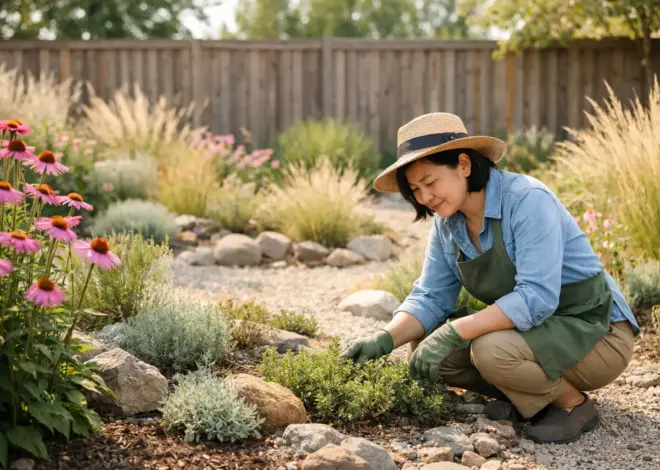
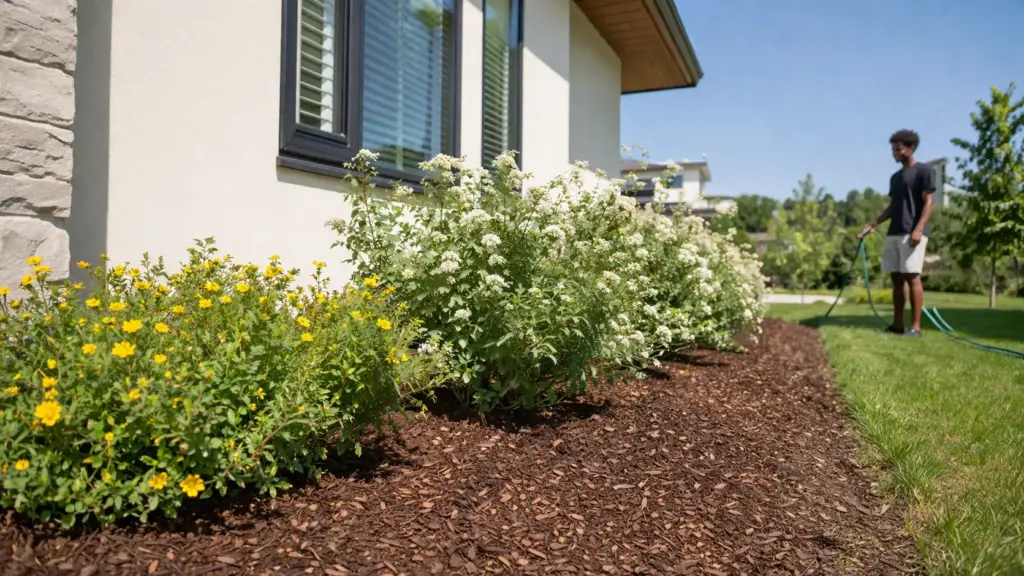
Caring for low maintenance native shrubs Ontario requires a shift in mindset: do less. During the first year, you’ll need to water them deeply once a week (about 25 liters per plant) to ensure the roots move beyond the planting hole. After that, they usually survive on rainfall alone. Mulching with 5-10 cm of shredded cedar or leaf mold is the single most effective thing you can do. It suppresses weeds and keeps the roots cool during those brutal July heatwaves. To further reduce weeding efforts between your shrubs, you might also consider integrating Canadian native groundcover solutions which act as a living mulch.
Essential Tools for Maintenance
While these plants are easy-going, you will eventually need the right gear for seasonal upkeep. To avoid tearing the bark and inviting disease, use high-quality bypass pruners for stems up to 1 cm and loppers for thicker branches. For older shrubs, a pruning saw is essential for “rejuvenation pruning,” where you remove one-third of the oldest canes at ground level to stimulate fresh growth.
Dealing with Invasive Look-alikes
A common mistake when maintaining low maintenance native shrubs Ontario gardens is misidentifying weeds. The highly invasive Common Buckthorn (Rhamnus cathartica) often infiltrates native plantings. It looks suspiciously like a native plum or dogwood but has a small thorn at the tip of its branches. Removing Buckthorn immediately is vital, as its berries contain a laxative that prevents birds from actually absorbing nutrients.
Which are the toughest varieties?
The crown for the toughest of all low maintenance native shrubs Ontario goes to the Northern Bush Honeysuckle (Diervilla lonicera). It can handle road salt, poor soil, and even moderate foot traffic. Another “bulletproof” option is the Silver Buffaloberry, which thrives in wind-swept areas and helps fix nitrogen in the soil. These aren’t just plants; they’re ecological workhorses that thrive where others wither.
| Shrub Name | Growth Rate | Soil Preference | Best Feature |
| Potentilla | 20-30 cm/year | Any / Well-drained | Blooms all summer |
| Snowberry | 30-45 cm/year | Clay / Silt | White winter berries |
| Diervilla (Bush Honeysuckle) | 25-40 cm/year | Sandy / Rocky | Extreme drought tolerance |
| Common Juniper | 10-15 cm/year | Poor / Dry | Year-round greenery |
Generic averages mask planting risks; site-specific soil analysis determines native shrub survival thresholds.
- Potentilla fruticosa: Survives temperatures down to -45°C.
- Common Juniper: Thrives in shallow, rocky soils where nothing else grows.
- Meadowsweet: Handles seasonal flooding and heavy clay with ease.
- Grey Dogwood: Spreads to fill gaps, meaning fewer weeds to pull.
Selecting Shade-Tolerant Bushes
Shade gardening fails without light-matching; American Yew provides evergreen structural integrity in deep-shade zones.
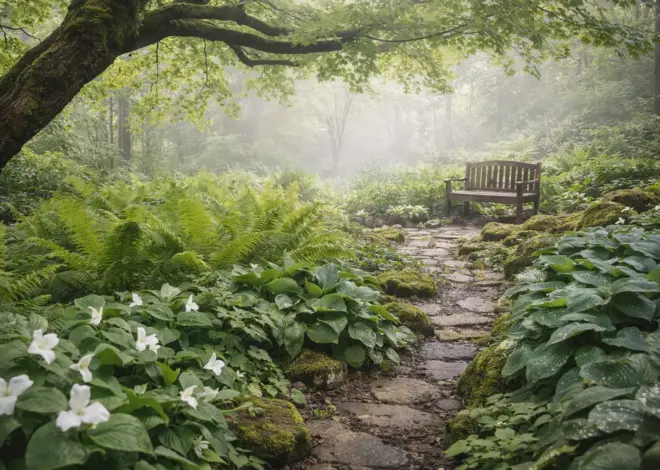
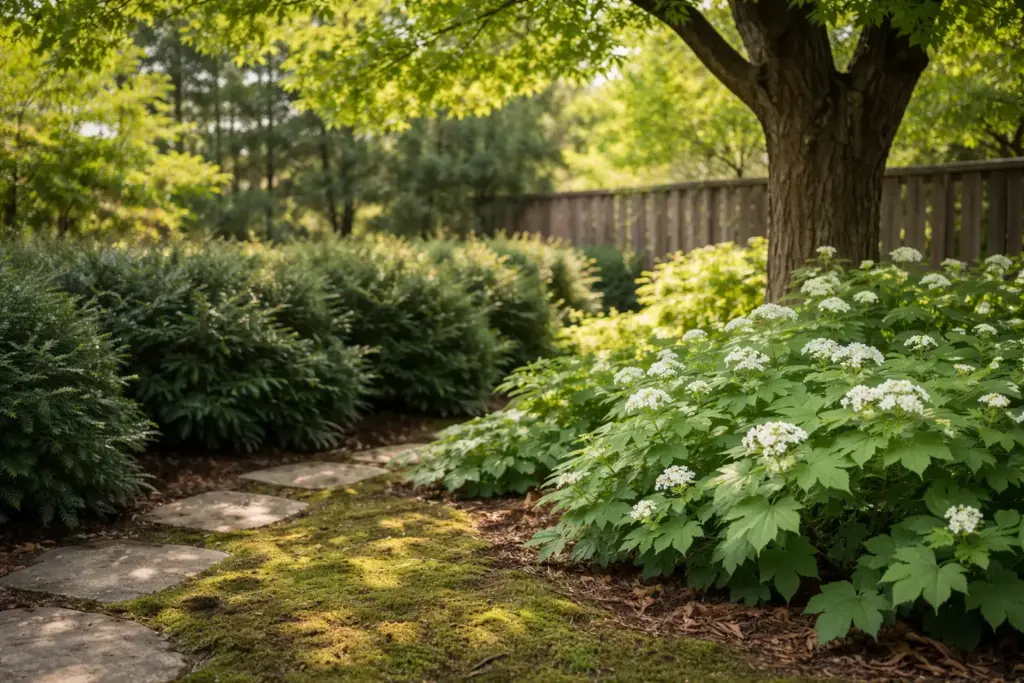
Finding native shade shrubs Ontario species is the biggest hurdle for urban gardeners with tall houses or mature maple canopies. Shade isn’t a monolith; it ranges from “dappled light” to “deep dark corner.” Many people mistakenly plant sun-loving evergreens in the shade, only to watch them become leggy and prone to fungal diseases within two seasons.
Which bushes thrive in dark spots?
For deep shade, the American Yew (Taxus canadensis) is one of the few native shade shrubs Ontario offers that stays green all year. If you want flowers, the Witch Hazel is a fascinating choice; it produces spidery yellow blooms in late autumn when everything else is dormant. Another winner is the Maple-leaved Viburnum, which mirrors the look of a maple tree but stays at a manageable 1-2 meter height.
Resilience to Ice and Heavy Snow
In the Ottawa Valley and Central Ontario, native shade shrubs Ontario must survive winter ice loading. The Pagoda Dogwood (Cornus alternifolia) has a unique horizontal branching structure that is surprisingly flexible. Unlike brittle non-natives, its structural integrity allows it to bend under the weight of an ice storm rather than snapping, making it a safer choice near walkways.
Supporting Forest-Edge Birds
Research from the Toronto and Region Conservation Authority (2021, Vaughan) highlighted that native shade shrubs Ontario like the Spicebush are critical for early-season pollinators. These shaded corridors are also the preferred nesting sites for the Gray Catbird and Wood Thrush, which seek out the dense foliage of shade-tolerant viburnums for protection from predators like hawks.
Can you plant under large trees?
Yes, but you have to deal with “dry shade.” Big trees act like umbrellas, blocking rain, and their roots suck up every drop of moisture. To succeed with native shade shrubs Ontario in these spots, you need to plant small (1-gallon pots instead of 5-gallon) to minimize root disturbance to the existing tree. Planting “Wild Hydrangea” or “Steeplebush” can work here if you provide supplemental water during the first two summers.
- Dig small: Small holes protect the large tree’s feeder roots.
- Water deeply: Use a soaker hose for 2 hours every 10 days.
- Add organic matter: A thin layer of compost helps retain moisture.
- Choose runners: Plants like Pagoda Dogwood can adapt well to edges.
Fast Growing Plants for Privacy
When you need a screen between you and the neighbors, fast growing native shrubs Ontario species are your best friends. You don’t want to wait a decade for a hedge to fill in. However, speed often comes with a trade-off: some fast growers can become aggressive if not pruned annually.
How quickly do these species grow?
You can expect fast growing native shrubs Ontario to put on anywhere from 40 cm to 90 cm of height per year under ideal conditions. For instance, the Ninebark can reach its full 3-meter height in just 4 to 5 years. Elderberry is even faster, often reaching maturity in just 3 seasons. If you’re starting with a 60 cm sapling, you’ll have a functional screen faster than you might think.
Managing Rapid Expansion
To keep fast growing native shrubs Ontario from overtaking a small urban lot, you must manage their “suckering” habit. Species like the Sumac or Grey Dogwood spread via underground rhizomes. If you want a neat hedge, you’ll need to mow around the base of the shrub or install a plastic root barrier 30 cm deep to contain the spread.
Resistance to Modern Pests
A survey by Landscape Ontario (2023, Milton) found that fast growing native shrubs Ontario are becoming the preferred choice for new subdivisions. Unlike the overplanted Emerald Ash, these shrubs are resistant to widespread pests like the Spongy Moth (Lymantria dispar) and Emerald Ash Borer. They provide a “future-proof” green wall that won’t vanish if a new invasive beetle arrives in the province.
What creates a good natural hedge?
Privacy hedges aren’t just barriers; multi-species native screens prevent monoculture pest collapses.
The best natural hedges aren’t made of a single species (which is a recipe for a pest disaster). Instead, mix several fast growing native shrubs Ontario types. A combination of Highbush Cranberry, Arrowwood Viburnum, and Chokeberry creates a thick, multi-textured wall. This diversity ensures that if one plant gets sick, the whole hedge doesn’t die.
“Native hedges are living fences. They provide privacy for us and a pantry for the birds. It’s a win-win that static wooden fences can’t match.” — Lorraine Johnson, Author of 100 Easy-to-Grow Native Plants for Canadian Gardens.
This detailed breakdown explores the best local species to use when building a vibrant, wildlife-friendly privacy screen in the Ontario climate.
FAQ & Summary
Navigating the world of native shrubs Ontario can feel overwhelming, especially with varying municipal bylaws and nursery availability. The key is to start small—pick one corner of your yard and replace the dying invasives with hardy local stars.
Where can I find local nurseries?
Finding native shrubs Ontario isn’t as hard as it used to be. Most major garden centers now have a dedicated “Native” section, but for the best selection, look for specialty growers. Organizations like “Network of Nature” or “Tallgrass Ontario” maintain directories of nurseries that grow their stock from local seed sources. This “local provenance” ensures the plants are genetically adapted to your specific region’s climate.
Are there provincial regulations?
Yes, but they mostly work in your favor. While there aren’t laws forcing you to plant native shrubs Ontario species in your private backyard, many municipalities offer rebates or free trees/shrubs through programs like “LEAF” (Local Enhancement & Appreciation of Forests). However, be aware of the Ontario Noxious Weeds Act; you cannot plant certain invasive species, and removing them can sometimes be legally required if they threaten local agriculture.
Do I need to fertilize my native shrubs?
No, unless your soil is literally just construction fill. These plants are adapted to Ontario’s natural nutrient cycles. Adding too much nitrogen can actually make them grow too fast and weak, making them easy targets for aphids.
Can I dig up shrubs from the woods to plant at home?
No, unless you have explicit permission from the landowner and it’s not a protected area. Ethics aside, “wild-dug” plants have a terrible survival rate because you’ll likely destroy the delicate fungal networks attached to their roots.
Are native shrubs safe for pets?
Yes, but some have berries that cause upset stomachs. For example, Elderberries must be cooked for human consumption and can make dogs sick if eaten in large quantities. Always check the specific toxicity of a plant if you have a curious puppy.
When is the best time to plant?
Autumn planting isn’t optional; late-season dormancy allows root establishment before the ground freezes.
Yes, but fall is actually better than spring. Planting in late September or October allows the roots to establish in cool, moist soil before the ground freezes, giving them a massive head start for the following summer.
How do I stop my fast-growing shrubs from taking over the yard?
No, unless you’re okay with a jungle. You should prune the oldest “canes” (stems) down to the ground every 3 years. This keeps the plant rejuvenated and prevents it from becoming a massive, tangled thicket.
Ultimately, transforming your outdoor space with native plants is about more than just aesthetics. By selecting species that evolved in Ontario’s specific climate—from the heavy clays of the Golden Horseshoe to the rocky Canadian Shield—you reduce your workload and provide a vital sanctuary for local wildlife like the Cedar Waxwing and the Monarch butterfly. Whether you are battling deep shade or searching for a fast privacy screen, there is a local bush perfectly suited for the job.
Ready to transform your backyard? Don’t head to the nursery empty-handed. We’ve synthesized this guide into a functional planner to help you select, verify, and plant your Ontario natives with 100% confidence.

Have you noticed more pollinators in your garden since you started adding native plants?
Sources
- University of Guelph Research (2020): Exploring Native Woody Plants for Urban Environments
- TRCA Shade Shrub Research (2021): Native Plants for Shade
- Landscape Ontario Survey (2023): Economic Value of Native Landscaping
- Douglas Tallamy Quote: Nature’s Best Hope – Homegrown National Park
- Lorraine Johnson Quote: 100 Easy-to-Grow Native Plants