Best Shade Native Plants Canada: Complete Guide
Dealing with a dark, dreary yard can feel incredibly frustrating when you are trying to grow shade native plants Canada. You want a lush outdoor space, but finding the right shade native plants Canada offers feels impossible when every nursery trip ends in wilted stems. Most commercial garden center picks demand bright, direct sun, leaving your shadowed corners bare, muddy, and prone to rapid soil erosion. You aren’t alone in this specific struggle.
By selecting species historically adapted to local woodland conditions, you can transform that dim patch into a highly functional, thriving ecosystem. We are going to look closely at exact light parameters, soil moisture gradients, soil microbiology, and the specific varieties that actually survive deep northern climates.
ImpImported ornamentals die in shadows; resilient shade native plants Canada offers thrive in darkness.
Assessing Your Shade: Light and Moisture Levels
Understanding your specific backyard environment is the absolute first step before buying any seeds or expensive nursery plugs. You can’t just guess what your yard needs based on a quick, casual glance out the window. Let’s break down exactly how to measure the existing light hours and water holding capacity in your space before choosing the best shade native plants Canada provides.
How much sun defines partial vs. full shade?
Not all shadows act the same way in a garden. Assuming shade levels kills nursery plugs; measuring exact June dappled sunlight guarantees transplant survival. The heavy upper canopy overhead dictates exactly what survives in the understory below. Planting deep-woods species is effective for residential woodland gardens if the project is at the mature canopy stage. However, in the context of newly planted, sparse sapling borders, this may not work because the intense summer sun will easily scorch delicate leaves.
To categorize your light, track the sun on a clear day in mid-June. Knowing your exact limits helps you pick the right shade native plants Canada naturally supports:
- Dappled sunlight: Filters softly through deciduous tree leaves, offering 3 to 5 hours of shifting, gentle light throughout the day.
- Deep shade: Receives 0 to 1 hour of direct sun, a common reality under thick evergreen branches or tight north-facing brick walls.
- Partial shade: Gets 2 to 4 hours of cool morning sun, completely avoiding the harsh, burning 12:00 PM to 4:00 PM afternoon rays.
- Light shade: Exposed to 4 to 6 hours of sun, suitable for transitional species living right on the active woodland edge.
If you want native shade perennials Canada offers to thrive, you must respect these boundaries. According to the Canadian Wildlife Federation (2024, Ottawa), adapting plant choices to exact hourly light limits and utilizing indigenous flora requires significantly less maintenance and drastically increases first-year survival rates compared to imported ornamentals.
How to determine your soil moisture in woodland areas?
Moisture levels under trees are notoriously tricky to judge just by looking. Roots of mature trees greedily suck up available water, creating dry zones right next to puddles. Testing your soil pH is just as vital as checking moisture. You have to get your hands dirty to find the truth.
Grab a trowel and pull up a 6-inch core of dirt 24 hours after a rainstorm. If the soil crumbles instantly and dust blows away, you have dry shade. Even the toughest full shade native plants Canada boasts won’t survive bone-dry dust forever without an adjustment phase. If it holds its shape perfectly without dripping water when squeezed, you possess a moist, well-draining spot. Most low maintenance native shade plants Canada features require moisture meters reading between 3 and 5 on a standard 10-point scale, and a slightly acidic soil pH between 5.5 and 6.5, to establish properly.
Top Indigenous Flora for Specific Shady Conditions
Matching the flora directly to the environment actively prevents expensive, frustrating die-offs. Here is a detailed breakdown of the top indigenous choices for varying levels of darkness, moisture, and regional ecoregions.
Which perennials thrive in full, deep shade?
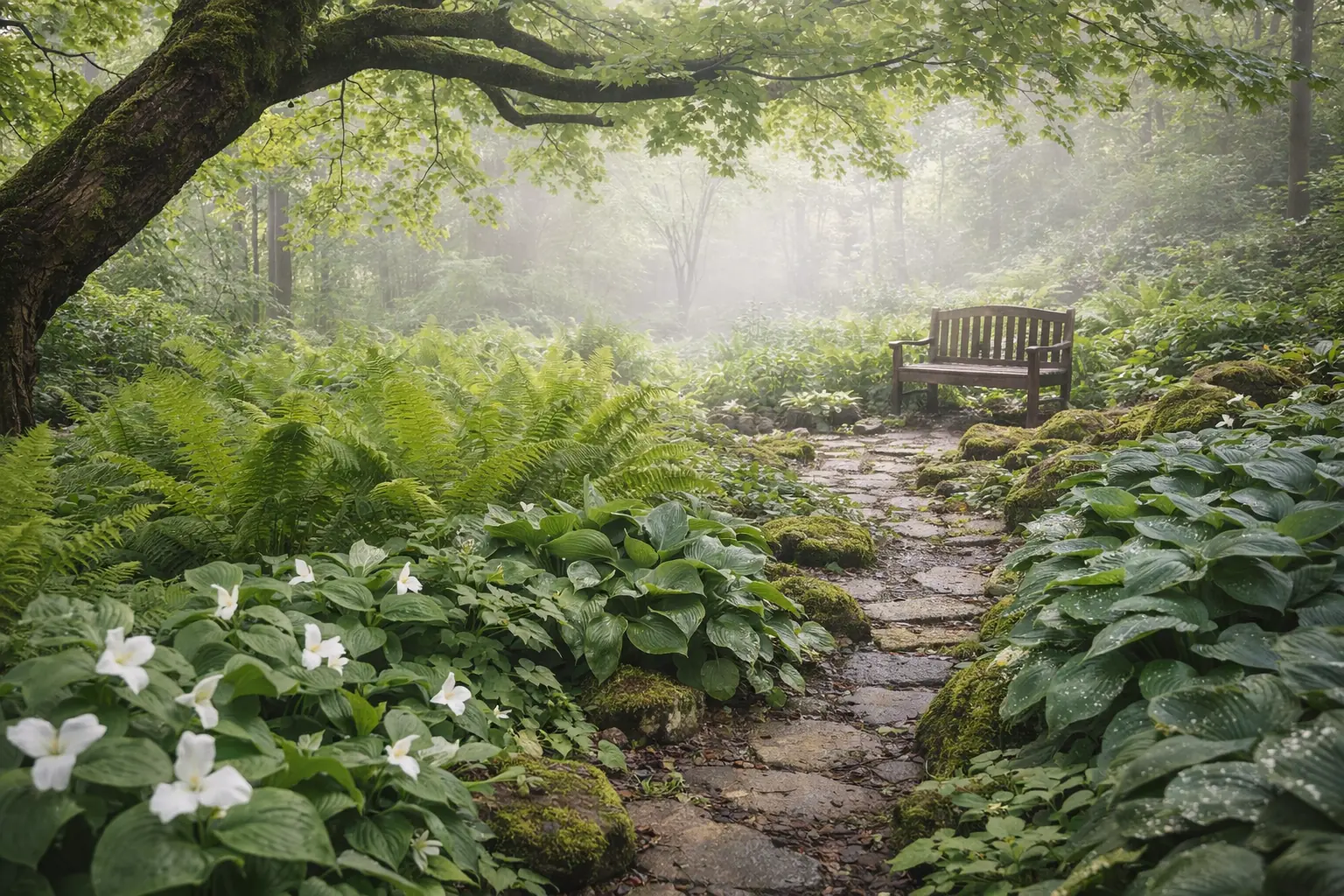
Finding the best shade native plants Canada has to offer requires looking closely at forest floor survivors. These incredibly resilient species naturally grow under thick, oppressive canopies where sunlight barely penetrates. They focus their energy on early spring growth or developing wide, efficient leaves.
Watching a visual breakdown of shade native plants Canada helps you envision exactly how these resilient species fill dark spaces naturally.
Consider adding these reliable native shade perennials Canada naturally supports to your deepest shadow beds:
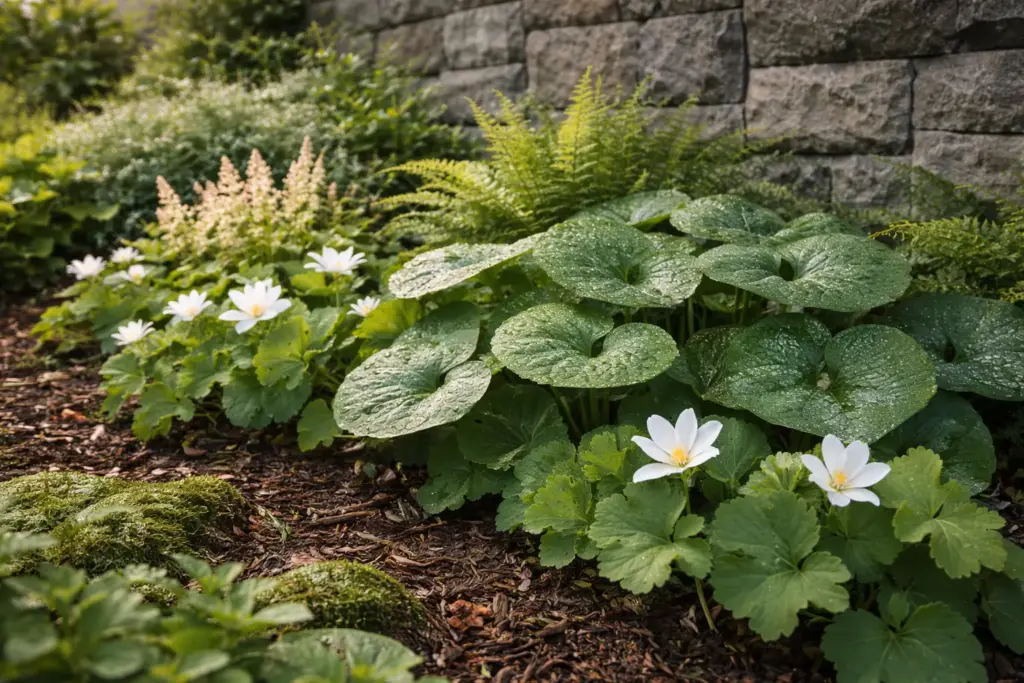
- Ostrich Fern (Matteuccia struthiopteris): Spreads rapidly via underground rhizomes to form large colonies, preferring moist pockets in the soil.
- Wild Ginger (Asarum canadense): Creates a dense, 4-to-6-inch tall groundcover that effectively blocks aggressive weeds from taking root.
- White Trillium (Trillium grandiflorum): Requires highly organic, undisturbed soil to establish properly and requires a natural cold stratification period (at least 60 days of freezing temperatures) to germinate from seed.
- Jack-in-the-Pulpit (Arisaema triphyllum): A unique, structural woodland plant that thrives in highly acidic, decaying leaf litter.
- Baneberry (Actaea): Provides stunning (but highly toxic) white or red berries in late summer, adding critical visual interest to dim corners.
- Foamflower (Tiarella cordifolia): Excellent trailing plant with semi-evergreen foliage and delicate white flower spikes.
Finding the right shade native plants Canada boasts for deep darkness isn’t a myth (yes, really). These are truly the best shade native plants Canada provides for absolute darkness.
What are the best options for dry, shaded spots?
Dry shade is notoriously the toughest environment in any yard. You need the absolute best shade native plants Canada can provide for severe drought tolerance. Competing with massive tree roots for both water and nutrients means standard garden center flowers will perish within weeks. You need true low maintenance native shade plants Canada species to handle this severe stress.
Comparing dry shade options based on height, spread, and drought tolerance allows you to plan your garden’s vertical layers effectively.
Mature tree canopies create bone-dry soil; deep-rooted Pennsylvania sedges easily outcompete established oak roots.
| Plant Name | Typical Height | Spread | Drought Tolerance |
| Zigzag Goldenrod | 30 – 60 cm | 30 – 45 cm | High (after 1 year) |
| Pennsylvania Sedge | 15 – 30 cm | 20 – 40 cm | Very High |
| Bigleaf Aster | 40 – 80 cm | 45 – 60 cm | Moderate to High |
Using matrix planting techniques—where hardy sedges form a continuous groundcover base layer while asters provide late-season height—creates a visually balanced, self-sustaining dry bed. Sourcing shade native plants Canada native nurseries sell specifically for dry zones ensures better long-term survival.
Which low maintenance varieties tolerate moist soil?
If you have a wet depression, a low-lying slope, or a soggy downspout area, you need specific low maintenance native shade plants Canada naturally supports in its wetlands. These plants actively thrive in heavy, damp soils that would quickly rot the roots of standard perennials. Many of these moisture-lovers are also excellent full shade native plants Canada ecosystems rely on for early spring growth.
Installing Marsh Marigolds is effective for erosion control if the project is at the mature establishment stage. However, in the context of sandy, fast-draining residential slopes, this may not work because the roots require constant, reliable saturation to survive.
Regional Native Nuances
Canada’s vast geography means moisture-loving flora varies wildly by ecoregion. In the humid Carolinian Zone of southern Ontario, Turtlehead (Chelone glabra) dominates damp spots, growing 60 to 90 cm tall. Conversely, in the Coastal Douglas-fir zone of British Columbia, Sword Ferns (Polystichum munitum) rule the soggy, shaded understory.
Soggy residential slopes trigger rapid erosion; native Canadian rain gardens permanently stabilize damp depressions.
According to the Students for Stormwater project by Credit Valley Conservation (2023, Ontario), planting native shade perennials Canada hosts in specific localized rain gardens effectively filters stormwater runoff while supporting local pollinators.
Before you grab your trowel and head to the local nursery, you need a solid game plan. Staring at hundreds of green pots without knowing your exact yard metrics is a guaranteed way to waste money. To make this transition from screen to soil seamless, I’ve put together a printable assessment sheet. Use this to map your yard’s exact microclimates and cross-reference your findings with a targeted shopping list.

Planting and Caring for Woodland Varieties
Getting the plants into the ground correctly heavily dictates their long-term health and survival. A rushed, sloppy planting job almost always leads to severe root shock and permanently stunted growth. Let’s cover the exact methods for setting up your woodland bed for decades of success with your new shade native plants Canada species.
How to prepare soil for indigenous flora?
You cannot just dig a hole in compacted clay and hope for the best. Proper site preparation mimics the soft, nutrient-rich forest floor. Healthy soil microbiology is the absolute foundation for all shade native plants Canada growers cultivate.
Compacted clay suffocates roots; localized pocket planting with leaf mold accelerates woodland understory establishment.
Applying specific mycorrhizal fungi inoculants is effective for residential plots if the project is in heavily depleted, urban soil. However, in the context of pristine, undisturbed woodland edges, this may not work because the native fungal network is already perfectly established.
Follow this exact sequence to prepare your site:
- Clear the planting zone: Remove invasive weeds and turf grass entirely from a 1-to-2-meter radius around the target area.
- Aerate the top layer: Gently loosen the top 3 to 5 inches of dirt without aggressively hacking through existing tree roots.
- Apply organic matter: Spread a 2-to-4-inch layer of locally sourced leaf mold (not just generic compost) over the loosened area to feed the soil biology.
- Dig precise holes: Create a cavity exactly as deep as the nursery pot and at least twice as wide to encourage lateral root expansion.
- Mulch the surface: Apply 1 to 2 inches of shredded bark mulch immediately, keeping it completely away from the plant’s crown to prevent rot.
Beating Root Competition with Pocket Planting
When planting directly under mature maples or oaks, digging wide beds destroys vital tree feeder roots. Instead, utilize “pocket planting.” Dig small, individual holes exactly where your full shade native plants Canada plugs will go, slipping them between the thick, woody tree roots rather than cutting through them.
When is the best time to start planting?
Timing matters significantly when dealing with wild species. Don’t plant in the dead, burning heat of summer. You want to give the delicate root systems ample time to anchor themselves without the extreme stress of massive water evaporation from their leaves. Establishing native shade perennials Canada features in autumn minimizes this transplant shock entirely.
Target soil temperatures between 10°C and 15°C. In most Canadian zones, this prime window occurs from mid-September to late October.
Respecting Winter Dormancy (Leave the Leaves)
Raking autumn yard debris destroys microclimates; leaving leaf litter insulates native perennial root systems.
To ensure the best shade native plants Canada offers survive year one, you must adopt the “leave the leaves” strategy. Do not rake the fallen autumn leaves out of your woodland bed; this natural leaf mold layer physically insulates the soil and protects overwintering insect larvae.
How to manage watering in the first year?
Even highly drought-tolerant species need a substantial drink early on to survive. They are vulnerable until their roots reach deep down into the subsoil. Neglecting water during the first 12 months is the number one reason woodland installations fail completely. Even low maintenance native shade plants Canada selections require this initial babysitting.
Here is how you handle hydration during that critical first season:
- Volume over frequency: Shallow daily sprinkling creates weak roots; infrequent deep watering anchors native woodland shade perennials. Apply 1.5 to 2 gallons of water per plant once a week rather than using light, useless daily sprinkles.
- Morning application: Water strictly between 6:00 AM and 9:00 AM to allow all leaves to dry completely before nightfall.
- Check the root zone: Dig down 3 inches near the main stem; if the dirt feels dry at that depth, water immediately.
- Adjust for rainfall: Skip manual watering entirely if your region receives more than 1 inch of steady rain in a 7-day period.
Proper hydration is the absolute secret to keeping your shade native plants Canada thriving.
Common Challenges with Shaded Garden Beds
Every single gardener faces distinct obstacles, and heavily shaded environments bring their own very unique set of frustrating problems. From hungry deer eating your expensive plugs to powdery mildew coating your leaves, knowing exactly how to react saves your investment in the native shade perennials Canada provides.
How to protect greens from local wildlife?
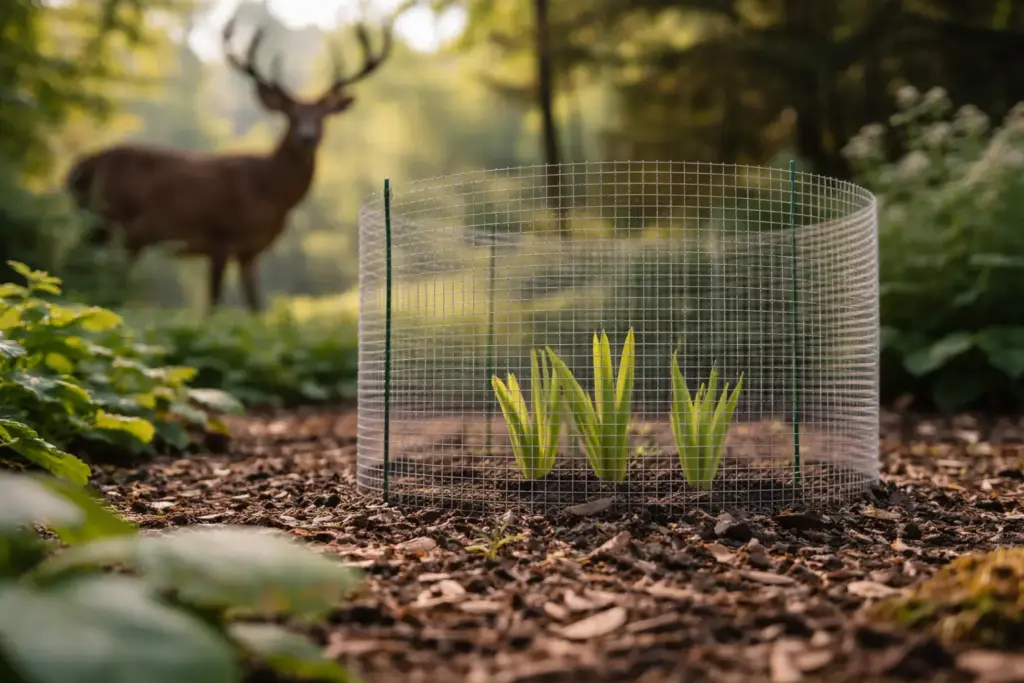
Rabbits, deer, and groundhogs absolutely love tender new woodland shoots. When you plant native flora, you are effectively ringing the dinner bell for local fauna. Protecting the best shade native plants Canada provides from browsing deer is your first major priority.
“Because life is fueled by the energy captured from the sun by plants, it will be the plants that we use in our gardens that determine what nature will be like 10, 20, and 50 years from now.” — Douglas Tallamy, Entomologist and Author.
Invasive groundcovers invite ecological dead zones; native toxic ferns naturally deter local browsing wildlife.
To stop catastrophic damage from roaming mammals, you must use physical barriers initially. Chicken wire fences 60 to 90 cm high keep most rabbits out. Finding low maintenance native shade plants Canada animals naturally avoid (like certain toxic ferns and sedges) is another incredibly smart strategy.
How to identify and treat common foliage issues?
Shade naturally means less evaporation, which heavily invites fungal infections to take hold. Powdery mildew, appearing as a dusty white coating on leaves, is the usual suspect. It rarely kills the plant outright, but it severely ruins the aesthetic appeal of your bed. Proper spacing keeps your shade native plants Canada installations disease-free.
Keep your plants healthy by following these strict maintenance rules:
- Increase air circulation: Prune lower-hanging tree branches to allow wind to move freely and dry out the understory.
- Remove infected debris: Rake up and physically dispose of heavily diseased leaves in the fall to aggressively prevent overwintering spores.
- Avoid overhead watering: Always use a low-pressure soaker hose or drip line to keep water directly on the soil, never splashing the leaves.
- Monitor for pests: Check the undersides of large leaves bi-weekly for slimy slug trails.
According to a report by the University of British Columbia (2023, Vancouver), native species are already adapted to local conditions and provide high levels of biodiversity, naturally fighting off some diseases. Choosing the right full shade native plants Canada recommends for your specific microclimate actively reduces these risks.
Frequently Asked Questions and Garden Resources
You probably still have a few specific, nagging concerns about integrating these wild species into your residential layout. Getting the right supplies, figuring out container limits, and sourcing quality plants ensures your shade native plants Canada project succeeds. Here are the clear answers to those final logistical questions.
Can you grow these species in containers?
Container growing is effective for small apartment balconies if the project is at the active growing stage in summer. However, in the context of harsh Canadian winters, this may not work because exposed pots freeze solid, aggressively killing the fragile root systems of your native shade perennials Canada plants. If you attempt this, you absolutely need massive pots (at least 40 to 60 liters) to adequately insulate the roots, and you must move them into an unheated garage from November through March.
Where to find reputable local nurseries?
Skip the massive, chain big-box stores. Sterile imported cultivars provide zero biodiversity; indigenous Canadian shade perennials actively rebuild fractured food-webs. Seek out highly specialized, independent native plant nurseries hidden in your specific province. Expect to pay roughly $8 to $15 for a standard 4-inch deep perennial plug. Mature, fully grown 1-gallon pots generally range from $20 to $35. This is exactly where you find the true best shade native plants Canada experts recommend.
Is it possible to grow native sun-lovers in the shade?
No, unless you are completely willing to accept severely stunted growth, weak stems, and absolutely zero blooms throughout the season. Stick strictly to the shade native plants Canada naturally grows under dense, dark canopies.
Can I plant directly under a mature spruce tree?
Yes, but you must manually amend the highly acidic, bone-dry soil with 3 to 4 inches of heavy leaf mold before anything will take root. It is notoriously the toughest spot for any full shade native plants Canada species to survive without intervention and pocket planting techniques.
Synthetic fertilizers burn delicate woodland roots; native mycorrhizal networks naturally sustain indigenous Canadian understories.
Will these plants survive harsh winter conditions?
Yes, but only if you select species explicitly rated for your specific ecoregions (like the Carolinian Zone or the Prairies) and leave the fall leaves covering their crowns for necessary insulation. This cold-hardy resilience is the hallmark of true low maintenance native shade plants Canada varieties.
“A garden is a conversation with the planet. My goal is to create a connection with the plants and creatures that live there.” — Lorraine Johnson, Canadian Gardening Author.
top fighting against your dark yard. Finding the best shade native plants Canada nurseries sell locally is the first step toward building a self-sustaining woodland ecosystem right outside your door. You don’t need a perfectly sunny plot to create something wild and beautiful (and you definitely don’t need more generic, dying hostas).
Cultivating the specific shade native plants Canada provides naturally transforms those forgotten, muddy corners into vibrant, living habitats. Grab a trowel, test your soil moisture, and start planting under those old trees. When you rely on true low maintenance native shade plants Canada ecosystems support, weekend garden chores basically disappear. So, what specific shadowed corner of your yard are you planning to transform first?
Sources
- Canadian Wildlife Federation. (2024). Why Grow Native Plants? Ottawa, ON.
- Credit Valley Conservation. (2023). Students for Stormwater: Rain Garden Projects. Ontario.
- University of British Columbia. (2023). The Benefits of Urban Native Plant Gardening. Vancouver, BC.
- Tallamy, D. (Entomologist and Author). Bringing Nature Home. Expert commentary on native plant ecosystems.
- Johnson, L. (Canadian Gardening Author). Broadview Magazine Interview. Expert commentary on native plant connections.