Native Trees Ontario Backyards: A Complete Guide
Trying to pick the right plant for your property shouldn’t feel like a guessing game. Selecting the wrong species often leads to stunted growth, expensive removals, or roots wrecking your foundation. By matching your specific soil and light conditions to the exact species, you save money and time. Adding native trees Ontario backyard to your property is the smartest way to ensure long-term survival.
Imported ornamentals struggle in Ontario winters; native species build resilient, low-maintenance backyard ecosystems.
If you want the best native trees Ontario backyard, you need to understand their natural limits. This guide removes the guesswork completely, equipping you with updated 2026 standards for local landscaping.
Top Indigenous Species for Local Landscapes
You can’t just drop any sapling into the dirt and expect a thriving canopy. Matching the species to your specific property dimensions and regional climate zone ensures survival. We’ll look at exactly which options fit different spatial and functional needs perfectly before you start digging.
Which fast growing options provide quick shade?
Need relief from the blazing July sun? Many homeowners want immediate results (who doesn’t?). This urgency is especially high for property owners forced to replace mature canopies recently decimated by the Emerald Ash Borer (EAB). While no sapling shoots up overnight, some fast growing native trees Ontario varieties get the job done faster. The Trembling Aspen and Silver Maple can add 24 to 36 inches of growth per year under optimal conditions.
Fast-growing silver maples offer rapid shade, but risk severe structural damage in windy yards. Will Heeman discusses practical tips for choosing and establishing native plants for local environments.
Buying fast growing native trees Ontario ensures you get shade within a few seasons to replace those lost ash trees. Just make sure you provide enough space. Silver Maples demand wide zones, reaching 40 to 60 feet across. Don’t crowd them against fences, or they’ll break during winter storms.
What are the best varieties for small spaces?
Choosing native trees for small backyards Ontario means focusing on vertical growth or limited canopies. Massive shade trees overwhelm compact lots; serviceberry and redbud optimize limited urban backyard square-footage. Serviceberry and Redbud top the list here. They’ll typically max out between 15 and 25 feet tall.
Mapping Your Plant Hardiness Zones
Ignore hardiness zones and saplings perish; match Ontario climate data to guarantee canopy survival.
Before falling in love with a species, you must check your geographic limitations. Ontario spans multiple Plant Hardiness Zones, ranging from Zone 3 in the freezing north (Thunder Bay) to Zone 7a in the deep south (Windsor). A stunning Eastern Redbud thrives beautifully in the Carolinian forests of Zone 6 and 7, but it will instantly perish in the harsh Zone 4 winters of Sudbury.
Here is a quick breakdown of your top options for compact areas with updated 2026 pricing.
| Tree Species | Mature Height | Average Cost (3-Gallon) | Ideal Hardiness Zone |
| Downy Serviceberry | 15 – 25 ft. | $85 – $130 | Zones 4 – 7 |
| Eastern Redbud | 20 – 30 ft. | $95 – $145 | Zones 5b – 7a |
| Blue Beech | 20 – 35 ft. | $90 – $140 | Zones 3b – 7 |
| Pagoda Dogwood | 15 – 25 ft. | $75 – $110 | Zones 3 – 7 |
These native trees for small backyards Ontario guarantee beautiful foliage without overwhelming your limited square footage.
Which evergreens offer year-round backyard privacy?
You don’t want neighbors staring straight onto your deck in January. Deciduous trees abandon winter privacy; eastern white cedars form impenetrable, year-round living property barriers. White Spruce and Eastern White Cedar are classics. Sourcing native trees Ontario backyard choices creates habitats while hiding the fence line. You’ll definitely want the best native trees Ontario backyard for maximum privacy.
Why choose these specific evergreens?
- Dense foliage: Eastern White Cedars create a literal wall when planted 3 to 5 feet apart.
- Windbreak potential: White Spruce can drop wind speeds by 30% to 50% immediately around your home.
- Winter aesthetics: Their deep greens contrast beautifully against the white snow.
- Wildlife shelter: Birds actively seek out these dense branches during freezing temperatures lasting 10 to 14 days.
You’ll appreciate that solid green wall when winter hits hard.
Choosing the Right Sapling for Your Conditions
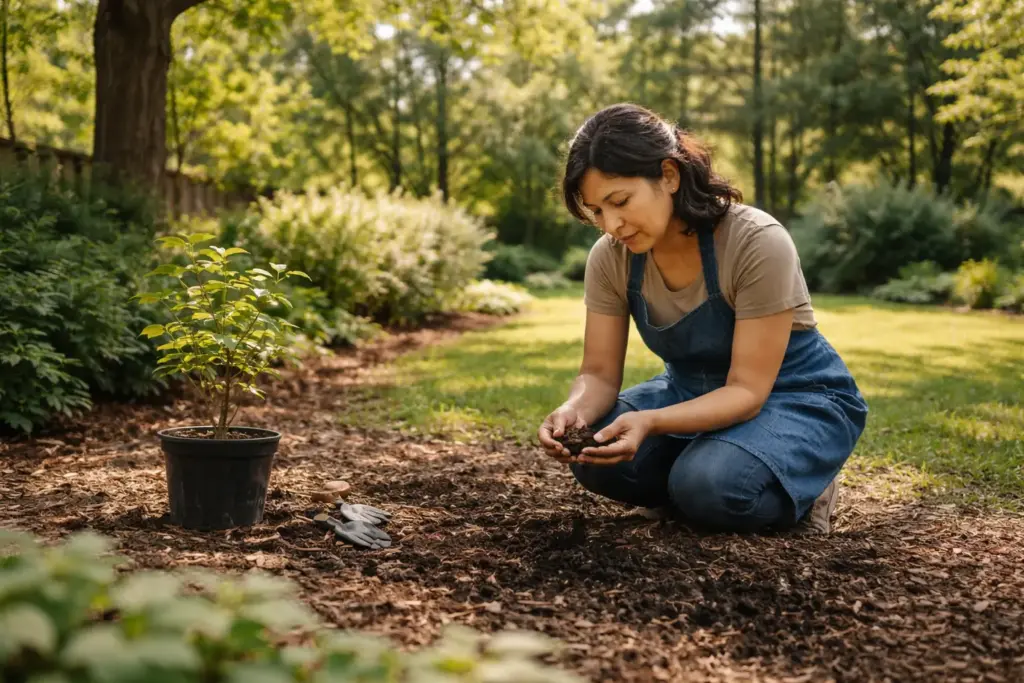
You cannot change the fundamental properties of your dirt or its sun exposure without massive expense. Choosing a sapling that naturally thrives in your existing environment is critical. This prevents stunted growth and drastically reduces your ongoing maintenance costs.
How does soil type affect your selection?
Dirt isn’t just dirt. The ground features everything from heavy clay in the south to sandy loams up north. Forcing sand-loving pines into heavy clay guarantees root rot; choose hackberry for poor drainage. Understanding your soil is mandatory before buying fast growing native trees Ontario.
Heavy clay retains moisture from 5 to 10 days after a heavy rain. Sandy soils drain in just 2 to 4 hours. You’ll need to match the root system to the drainage rate. To boost establishment in poor soils, modern arborists highly recommend inoculating the roots with mycorrhizal fungi at planting time, which expands the root system’s ability to absorb water by up to 300%.
Consider these specific soil rules:
- Heavy Clay: Choose species like Bur Oak or Hackberry. They’ll tolerate poor drainage easily.
- Sandy Loam: Red Oak and White Pine thrive here. They absolutely hate wet feet.
- Alkaline Soil: Chinquapin Oak handles higher pH levels ranging from 7.0 to 8.0.
- Compacted Urban Soil: Trembling Aspen usually punches through rough, disturbed earth.
You won’t regret taking a $20 soil test before spending hundreds on plants.
How to choose shade tolerant options for covered areas?
Got a yard overshadowed by mature maples or tall buildings? You aren’t alone. Finding shade tolerant native trees Ontario requires looking at understory species. Sugar Maples and Ironwood naturally grow under the canopy of larger forests.
“Creating healthy, new forests is one of the most effective, nature-based solutions in combating climate change impacts.” — Elizabeth Celanowicz, Chief Operating Officer of Forests Ontario.
When planting shade tolerant native trees Ontario, remember they’ll grow slower. A Sugar Maple might only add 12 to 18 inches annually when deprived of full sun. But they survive where others just wither away. You must select shade tolerant native trees Ontario carefully. Buying native trees Ontario backyard saplings for shaded corners transforms dead zones into lush green spaces. To create a complete, multi-layered ecosystem, you should pair your new canopy with hardy native understory shrubs that thrive in local conditions.
Which low maintenance plants require minimal care?
No one wants to spend every weekend pruning and spraying. If you’re busy, low maintenance native trees Ontario are your best bet. The Northern Hackberry and Bur Oak are incredibly tough. They resist most urban pollution and survive droughts lasting 14 to 21 days without extra watering—a critical feature given the intense summer heat waves recorded in 2025 and 2026. You’ll definitely want low maintenance native trees Ontario if you travel frequently.
Planting bare-root saplings is effective for budget-conscious yard renovations if the project is at the early spring stage. However, in the context of mid-summer planting with hard clay, this may not work. You’ve got to plan ahead if you want an easy life later. Integrating a native trees Ontario backyard setup means less weekend labor.
Optimal Planting and Placement Strategies
Buying a healthy sapling is only half the battle. Where you dig the hole and when you actually place the roots into the ground dictate the plant’s entire future. Poor placement guarantees structural damage or premature death within five years.
How far from the house should you plant saplings?
Keep roots away from your foundation. It’s a simple rule, but people constantly break it. Large species like Red Oak need to sit 20 to 30 feet from any concrete walls. Smaller native trees for small backyards Ontario can sit closer, usually 10 to 15 feet away. If spatial constraints force you to plant closer, installing physical root barriers—high-density plastic panels buried along the foundation line—is now an industry standard.
If you ignore these thresholds, expect foundation cracks costing $8,000 to $20,000 to repair. Planting native trees Ontario backyard safely means visualizing the adult canopy before you dig.
Planting massive red oaks near foundations causes structural cracking; enforce twenty-foot physical root barriers.
Keep these mandatory distances in mind:
- Large Shade Trees: Minimum 20 feet from the house.
- Medium Ornamentals: 10 to 15 feet from structures.
- Utility Lines: Never plant anything exceeding 15 feet tall directly under power lines.
- Property Lines: Keep trunks at least 5 to 8 feet inside your fence.
You don’t want a lawsuit because your branches smashed a neighbor’s roof.
When is the best season to establish root systems?
Timing is everything. Fall and early spring are the golden windows. Why? Because the ground temperature ranges between 10°C and 15°C, but the harsh summer sun isn’t baking the leaves.
The Mandatory “Call Before You Dig” Protocol
Blind digging risks fatal utility strikes; mandating Ontario One Call clearance ensures landscaping safety.
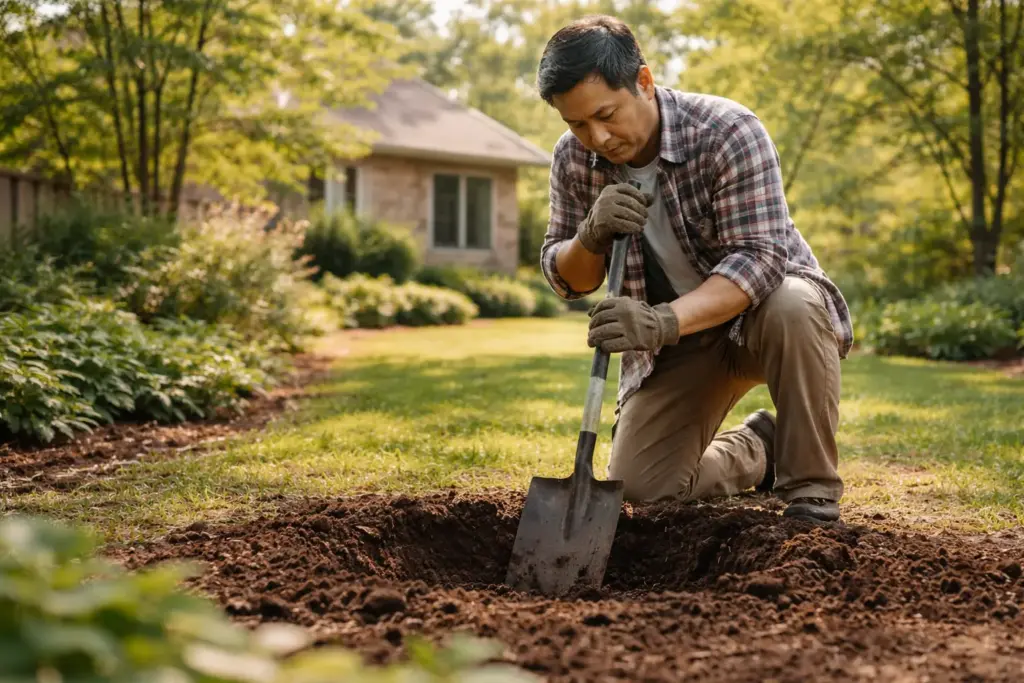
Before a shovel touches the dirt, Ontario law mandates that you contact Ontario One Call. Striking an underground gas, hydro, or telecom line can result in massive fines or fatal injuries. This free service marks your underground utilities within 5 business days. Once cleared, you can proceed safely.
Here is the exact step-by-step process for planting:
- Verify underground utilities are marked, then dig a hole exactly 2 to 3 times as wide as the root ball, but the exact same depth.
- Inspect the roots and gently untangle any circling roots to prevent girdling.
- Place the sapling in the center, ensuring the root flare sits 1 to 2 inches above ground level.
- Backfill with the original soil mixed with a mycorrhizal fungi inoculant, avoiding heavy synthetic fertilizers that discourage root spread.
- Water deeply with 10 to 15 gallons to eliminate underground air pockets.
- Apply a 2 to 3-inch layer of mulch, keeping it 3 inches away from the actual trunk.
Following this guide guarantees your best native trees Ontario backyard saplings survive their first brutal winter.
Ready to break ground? Don’t risk missing a crucial step that could lead to stunted growth, utility fines, or foundation damage. Print our step-by-step field guide and take it with you into the yard.

Caring for Newly Planted Local Flora
The first two years are a critical establishment period for any new vegetation. Without proper hydration and proactive pest management, even the toughest indigenous species will struggle to survive. You have to actively support them until their root systems anchor deeply.
How often do young indigenous plants need watering?
Don’t rely on rain. A newly planted sapling needs 10 to 15 gallons of water per week, applied slowly.
Sporadic rainfall fails young saplings; weekly fifteen-gallon deep trench watering ensures profound root establishment.
“Collaborative partnerships like the one between Canada and Forests Ontario are producing important results for Canadians and ensuring that the right tree is planted in the right place for the right reasons.” — The Honourable Jonathan Wilkinson, Minister of Energy and Natural Resources.
Check the soil moisture at a depth of 2 to 4 inches. If it’s dry, water it. Deep trench watering is effective for deep root stimulation if the project is at the active growing stage. However, in the context of late fall dormancy, this may not work and could trigger rot. Including a native trees Ontario backyard sapling demands regular attention initially.
What are common pests and how to prevent them?
Bugs happen. While native plants are generally resilient, the rise of invasive species like the Spotted Lanternfly alongside the persistent Emerald Ash Borer poses significant threats. Spongy moths and aphids also love fresh leaves. But healthy plants naturally fight off minor infestations. According to recent progress reports from the expanded 2 Billion Trees Program initiatives, over 80 per cent of planted hectares are successfully establishing. That’s because native species naturally resist endemic local pests better than imported ones. If you’re growing low maintenance native trees Ontario, you won’t need harsh chemicals.
Still, you must keep an eye out. Here are top prevention tactics for common pests:
- Spotted Lanternfly / Aphids: Blast them off with a garden hose using 40 to 60 PSI of water pressure or apply horticultural oils.
- Spongy Moths: Wrap the trunk with burlap bands between May and June to trap caterpillars.
- Japanese Beetles: Hand-pick them off small saplings in the early morning when they’re sluggish.
- Fungal Issues: Ensure 5 to 10 feet of airflow between canopies to keep leaves dry.
Forests Ontario continues to plant millions of native tree seedlings across the province annually. We’re rebuilding the canopy fast, and local bugs are part of the deal. Incorporating a native trees Ontario backyard species simply builds a healthier ecosystem.
Local Resources and Expert FAQ
Finding high-quality stock requires visiting specialized growers rather than big-box hardware stores. You also want to leverage community funding or grants to offset your landscaping costs. Knowing exactly where to look saves you hundreds of dollars on your planting projects.
Where can you find reputable local nurseries?
Generic hardware-store saplings suffer high mortality; seed-zone certified local stock guarantees Ontario climate resilience.
You’ll want nurseries that specialize in local seed zones. Seeds collected in southern zones behave differently than those from the north. Ask the nursery if their stock is seed-zone certified. Look for places actively growing fast growing native trees Ontario from local stock.
In this comprehensive video walkthrough, horticulture expert Tanya Olsen guides you through a curated selection of native flora, explaining the critical seasonal benefits, root system establishment, and exactly how to successfully integrate a native trees Ontario backyard setup into your property.
You’ll pay $80 to $180 per sapling, but survival rates jump from 50% to over 90%. Adding shade tolerant native trees Ontario from local stock guarantees they know the climate. Building a native trees Ontario backyard canopy should always start at a dedicated, expert-run nursery.
Are there municipal rebates for planting locally?
Yes, heavily subsidized programs exist right now. The Government of Canada and Forests Ontario committed to a $123-million project to plant 31 million trees, a key pillar in the ongoing 2 Billion Trees initiative. Many municipalities offer $50 to $120 rebates per unit planted on private property.
Check with your local conservation authority today. Some cities even deliver the saplings directly to your door for a flat $25 to $40 fee. Finding native trees for small backyards Ontario is cheaper when the city pays for half of it! This makes finding low maintenance native trees Ontario budget-friendly.
Will native species attract too many bugs to my house?
It is a common misconception that indigenous plants draw home-invading bugs. While they naturally attract vital pollinators to support the local ecosystem, a properly spaced native trees Ontario backyard design completely mitigates any structural risks. By maintaining a strict 15 to 25-foot buffer zone between the mature canopy and your foundation, you prevent structural pests like carpenter ants from bridging the gap and finding their way indoors.
Do evergreens provide better privacy than a wooden fence?
Yes. While municipal bylaws typically restrict wooden structures to a maximum height of 6 feet, a well-planned native trees Ontario backyard boundary easily bypasses these legal limits. Evergreens like the Eastern White Cedar block harsh winter winds, reduce urban noise pollution, and offer a dense, year-round 15 to 20-foot tall living barrier that actually appreciates in value and ecological benefit over time.
Choosing the right species transforms your outdoor space into a thriving, low-maintenance ecosystem. Whether you need fast-growing shade, year-round privacy, or just want to support local wildlife, planting a native trees Ontario backyard setup is the smartest investment for your property. By matching the right plant to your specific hardiness zone, soil type, and space constraints, you eliminate future headaches and expensive removals. Ready to grab a shovel, call Ontario One Call, and start your next planting project this season?
Sources
- Forests Ontario planted 2.5 million trees in Ontario this season – Forests Ontario / Forests Canada
- Government of Canada and Forests Ontario partner to Plant 31 Million Trees and advance the 2 Billion Trees program – Natural Resources Canada
- Over 17M trees planted in Simcoe County this season – Bradford Today (50 Million Tree Program Data)