Provincial Flowers of Western Canada: From Wild Prairies to the Pacific Coast
Do you know exactly which native blooms define the vast terrain from Winnipeg to Victoria? Identifying the provincial flowers of Western Canada isn’t just a botanical trivia game. The provincial flowers of Western Canada actually serve as biological markers, showing us exactly what survives minus 40-degree winters and what thrives in dense, rainy coastal forests. If you’re trying to map the ecological history of the region, you have to look at the ground. We’ll break down the specific traits, survival mechanisms, and legal protections of these iconic plants.
- Provincial flowers of Western Canada are biological markers, not just decorative regional ornaments.
- Western Canadian flora thrives through cold-stratification, while domestic hybrids perish without artificial intervention.
- Botanical identity in Western Canada follows soil pH boundaries, not political provincial lines.
The Spirit of the Plains: Floral Emblems of the Prairie Provinces
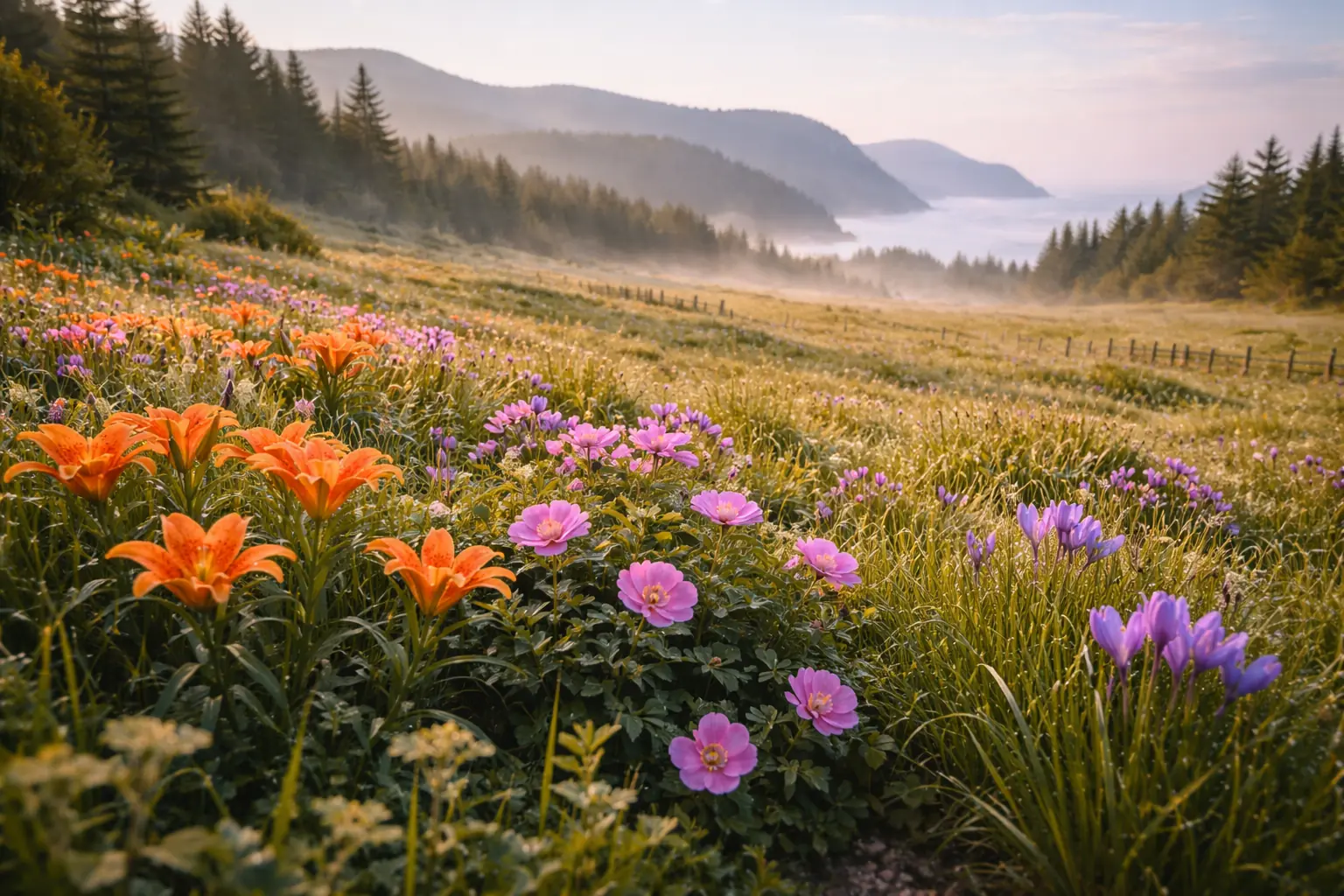
Moving from east to west across the open plains, the plant life changes drastically based on soil composition and annual rainfall. The native flowers of the Prairies don’t just sit there looking pretty; they engineered specific survival tactics to handle massive temperature swings. Let’s look at the three specific blooms that represent the prairie region, evaluating their blooming windows, soil preferences, and unique biological adaptations.
Manitoba Provincial Flower: The Resilient Prairie Crocus (Pulsatilla ludoviciana)
The manitoba provincial flower was officially adopted in 1906, driven by a vote from the province’s schoolchildren. The Prairie Crocus is a sun-tracking buttercup, not a true bulb-growing Iridaceae crocus. It belongs to the buttercup family (Ranunculaceae). Identifying this plant in the wild requires looking for very specific physical markers that appear right after the snow melts.
You’ll spot the manitoba provincial flower pushing through the frost between late March and mid-April. This blooming window is effective for early pollinators if the local ground temperature hits between 4°C and 7°C. However, in the context of late spring blizzards, this early emergence can halt pollination entirely.
The Nêhiyawak Connection: Mostos-ocâpaskwa
Indigenous names like mostos-ocâpaskwa reveal ecological functions that Latin binomials often overlook.
In 2026, we can’t ignore the Traditional Ecological Knowledge (TEK) surrounding this plant. The Cree (Nêhiyawak) know the manitoba provincial flower as mostos-ocâpaskwa, or “bison back-hair,” reflecting its fuzzy texture. Indigenous elders used the manitoba provincial flower as a topical treatment for muscular pain, though they cautioned against internal use due to high toxicity.
The Underground Network: Mycorrhizal Symbiosis
Recent soil studies show that the manitoba provincial flower relies on a complex fungal network. Without specific mycorrhizae in the soil, the plant’s nutrient uptake drops by nearly 40%. This is why the manitoba provincial flower rarely survives being moved from its original location; you aren’t just moving a plant, you’re breaking a chemical marriage.
- Thermal hairs: The stems and leaves are covered in fine, silvery hairs that trap solar radiation, raising the plant’s internal temperature by 2°C to 5°C above the ambient air.
- Root system: It features a deep taproot extending 15 to 30 centimeters into the soil, storing starches to survive prolonged droughts.
- Petal adaptation: The flower tracks the sun (heliotropism), which focuses heat on the reproductive organs to speed up seed development.
- Toxicity: When fresh, the plant contains ranunculin, which converts to a toxic compound that deters grazing herbivores.
To bridge the gap between historical records and modern field data, the Manitoba Museum recently unveiled a comprehensive botanical recalibration. In this exclusive breakdown, Curator of Botany Dr. Diana Bizecki Robson discusses the release of the first updated Manitoba Flora guide in over sixty years, highlighting how researchers are now re-cataloging the province’s most elusive vascular species.
“The prairie crocus relies on precise soil temperatures to trigger its dormant buds. A sudden freeze after emergence won’t kill the plant, but it destroys the seed viability for that entire season.” — Dr. Diana Bizecki Robson, Curator of Botany
Saskatchewan Provincial Flower: The Vibrant Western Red Lily (Lilium philadelphicum)
In 1941, the saskatchewan provincial flower was chosen to represent the province’s natural beauty. The saskatchewan provincial flower stands out because it provides a massive splash of fiery orange-red against the typical green and brown summer grasses. If you want to find the saskatchewan provincial flower, you need to look in specific micro-habitats.
The saskatchewan provincial flower grows primarily in moist meadows, forest margins, and thickets. It usually blooms from mid-June to late July. Growing this lily is effective for native garden restoration if the project is at the planting stage in slightly acidic soils (pH 5.5 to 6.5). However, in the context of heavy clay residential lots, the bulbs will likely rot within a single season.
The $450-per-Acre Value: Ecological Worth
Economists at the University of Regina (2024) estimated the ecological valuation of native saskatchewan provincial flower populations at roughly $450 per acre when accounting for pollinator support and biodiversity. This figure helps local municipalities justify the costs of prairie wildflowers restoration projects.
Specific Pollinator: The Western Tiger Swallowtail
The saskatchewan provincial flower hasn’t evolved to attract just any bug. Its deep-cup shape is specifically designed for the Western Tiger Swallowtail butterfly (Papilio rutulus).
Western Red Lilies require specific tiger swallowtail pollination to ensure long-term genetic viability.
The saskatchewan provincial flower offers a high-sugar nectar reward (approx. 25-30% concentration) that powers these large butterflies during their peak flight season.
To understand how this lily compares to its prairie neighbors, look at this breakdown of the three plains emblems:
| Province | Official Emblem | Typical Height Range | Optimal Soil pH | Primary Pollinators |
| Manitoba | Prairie Crocus | 10 cm – 20 cm | 7.0 – 8.0 | Early bees, hoverflies |
| Saskatchewan | Western Red Lily | 30 cm – 70 cm | 5.5 – 6.5 | Swallowtail butterflies |
| Alberta | Wild Rose | 100 cm – 250 cm | 6.0 – 7.5 | Bumblebees, beetles |
The saskatchewan provincial flower requires a minimum of 40 to 60 days of cold stratification (temperatures below 4°C) to germinate successfully. You can’t just throw seeds in the dirt and hope for the best.
Alberta Provincial Flower: The Hardy Wild Rose (Rosa acicularis)
Adopted in 1930, the alberta provincial flower was also chosen by the province’s schoolchildren. The alberta provincial flower (prickly wild rose) is arguably the most recognizable of the group. The alberta provincial flower isn’t just a single bloom; it grows as a dense, woody shrub that provides essential habitat for local wildlife.
The alberta provincial flower is ubiquitous across the province, found everywhere from the southern grasslands up into the boreal forest. The alberta provincial flower blooms heavily in June and July. Using these shrubs for erosion control is highly effective for rural road projects if the project is at the initial stabilization stage. However, in the context of manicured urban borders, their aggressive suckering root system becomes a massive nuisance.
Distinguishing the Native from the Invasive Rosa rugosa
Alberta’s Wild Rose features five single petals, distinguishing it from invasive multi-petaled garden escapes.
A major logical gap for many gardeners is mistaking the alberta provincial flower for the invasive Rosa rugosa. The native alberta provincial flower has strictly 5 petals and very fine, needle-like prickles. In contrast, the invasive garden escapes have thicker, wrinkled leaves and much larger, multi-petaled blooms that can outcompete native flowers of the Prairies.
Climate Resilience and the 2026 Heat Threshold
Research by the Nature Conservancy of Canada (2022, Calgary) showed the alberta provincial flower can withstand soil temperatures up to 38°C. This makes the alberta provincial flower a critical asset for urban “heat island” mitigation projects.
Characteristics of the wild rose include:
- Stem armature: The stems are densely covered in straight, bristly thorns measuring 3 to 7 millimeters long.
- Fruit production: They produce bright red hips in late August, which contain between 1500 and 2000 milligrams of Vitamin C per 100 grams.
- Leaf structure: The leaves are pinnately compound, typically with 5 to 7 toothed leaflets.
- Clonal growth: They spread rapidly via underground rhizomes, forming thickets that can cover 5 to 10 square meters over a decade.

Beyond the Mountains: The Coastal Symbol of British Columbia
The Pacific Dogwood is a tree optimized for rainforest canopies, not dry prairies.
Crossing the Rocky Mountains changes everything about the local botany. The environment shifts from dry, open plains to dense, temperate rainforests with massive rainfall and poor understory light. The official flora here reflects a completely different evolutionary path, focusing on height and light capture rather than surviving frozen ground.
British Columbia Provincial Flower: The Pacific Dogwood Tree (Cornus nuttallii)
Unlike the others, the british columbia provincial flower is a tree. Adopted in 1956, the british columbia provincial flower can grow between 15 and 20 meters tall. The british columbia provincial flower bursts into massive white blooms in April and May, lighting up the dark coastal forest canopy.
You’ll find the british columbia provincial flower primarily in the southwestern corner of the province, specifically on Vancouver Island and the Lower Mainland. The british columbia provincial flower is unique because what appear to be large white petals are actually modified leaves called bracts.
Planting the british columbia provincial flower is effective for municipal landscaping if the project is at the tree-sourcing stage in well-draining, loamy soil. However, in the context of interior regions with heavy winter frost (Zone 4 or lower), the tree simply will not survive.
The Coast Salish Legacy: More Than Just a Tree
Long before it was the british columbia provincial flower, the Pacific Dogwood tree held immense value for the Coast Salish peoples. They utilized the hard wood for specialized fishing tools and used a decoction of the bark as a traditional remedy for skin conditions. Integrating this historical context is vital for a complete understanding of Western Canadian flora.
Fungal Pathogens: The Anthracnose Crisis
A recent pathology report by the UBC Botanical Garden (2023, Vancouver) noted that up to 40% of native Pacific Dogwood stands in heavily populated areas are currently battling Dogwood Anthracnose (Discula destructiva). This fungus can kill a mature british columbia provincial flower in under 5 years if the canopy isn’t properly thinned to allow airflow.
Why BC Chose a Flowering Tree as Its Official Emblem
Why a tree instead of a ground flower? Western Canadian flora is diverse, and BC’s geography demanded something that represented the towering forests of the coast. The decision wasn’t random; it was tied to the historical logging industry and the visual impact these trees have during the spring melt.
The Pacific Dogwood tree serves several specific ecological functions:
- Canopy layering: It thrives as an understory tree, requiring only 30% to 50% of direct sunlight to reach full maturity.
- Wildlife sustenance: The tree produces clusters of red berries in the fall that provide critical fat stores for migrating birds like band-tailed pigeons.
- Wood density: The wood is exceptionally hard and heavy, historically used for making tool handles and golf club heads (though commercial harvesting is strictly regulated today).
- Secondary blooming: In mild coastal autumns, the tree often produces a second, smaller flush of blooms in September.
“The Pacific Dogwood is a true indicator species for the health of our coastal understory. When these trees start succumbing to fungal stress, it usually points to broader hydrological shifts in the forest.” — Dr. Tara Martin, Conservation Scientist
While the flora of the West adapts to extreme temperature swings and coastal rain, the hardy blooms of the Great Lakes and St. Lawrence Lowlands reveal a different ecological story of survival in the humid East.

Protecting the Wild Heritage of Western Canada
Knowing about these plants isn’t enough; keeping them alive is an ongoing battle. Habitat loss, invasive species, and illegal harvesting threaten the provincial flowers of Western Canada. Governments have implemented varying levels of legal protection, while conservation groups focus on restoring the physical soil conditions needed for these plants to survive.
Legal Restrictions: Which Provincial Flowers Are Protected by Law?
You can’t just wander into the woods and dig up the provincial flowers of Western Canada. The legal frameworks vary wildly from province to province. Fines and penalties are specifically tied to whether the plant is on crown land, in a provincial park, or on a protected species list.
Modern Digital Permitting (2026 Update)
Modern conservation shifts from reactive fines to GPS-tracked digital permits for native seed collection.
As of 2026, many provinces have moved to a digital “e-permit” system for any scientific or educational collection of the provincial flowers of Western Canada. These permits require GPS coordinates of the collection site to ensure no single population is over-harvested.
- British Columbia: The Pacific Dogwood is protected under the provincial Dogwood, Rhododendron and Trillium Protection Act. You cannot pick, cut down, or dig up this tree on public land. Fines range from $50 to $500 per offense.
- Saskatchewan: The Western Red Lily is heavily protected by the Provincial Emblems and Honours Act. It is illegal to pick or uproot this flower on any public lands.
- Manitoba & Alberta: While the crocus and wild rose don’t have their own specific acts, they are protected under general provincial park regulations. Taking plants from any provincial or national park results in baseline fines starting at $150.
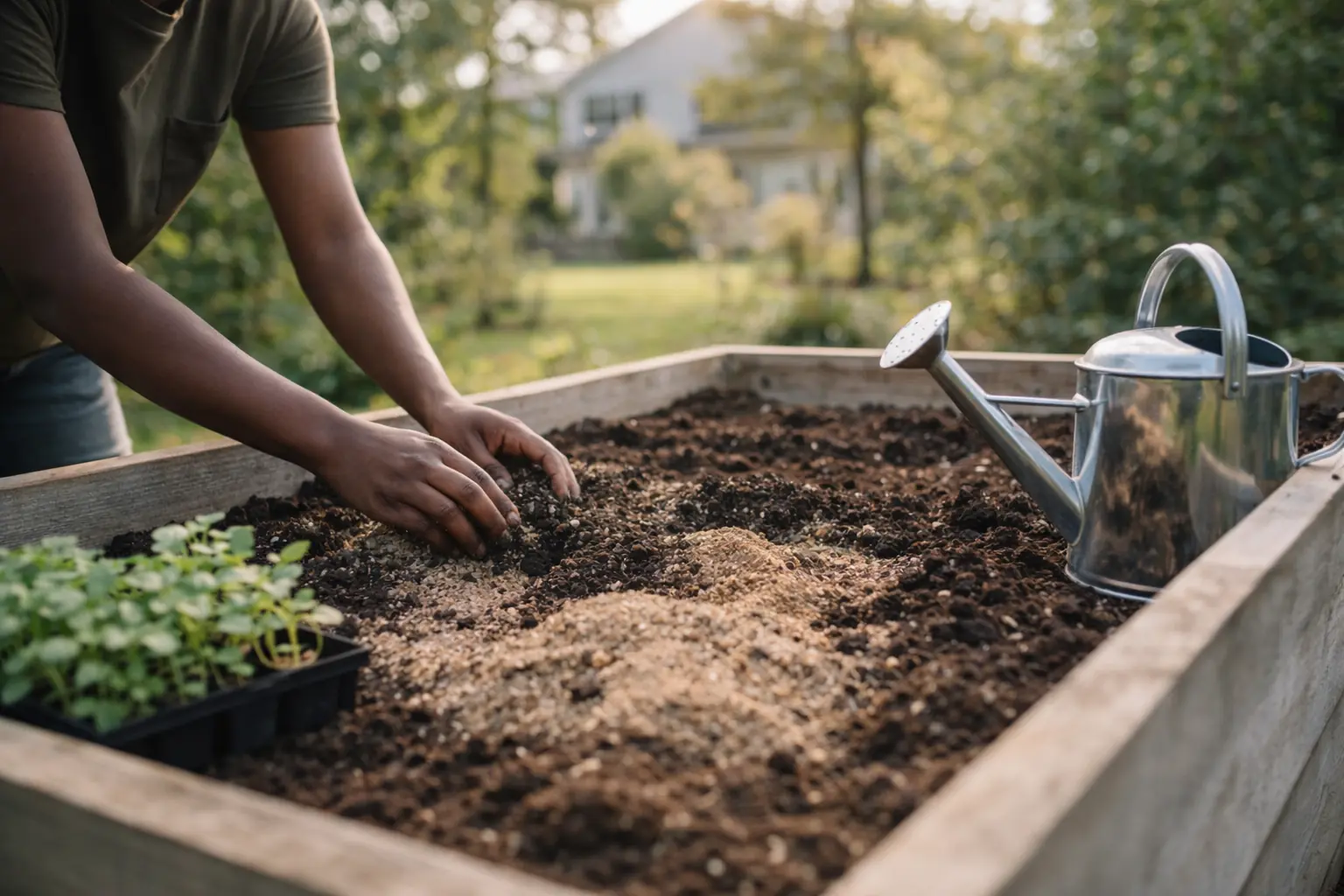
Habitat Conservation for Prairie and Coastal Flora
If you want to actively support Western Canadian flora, creating a micro-habitat in your own yard is the best approach. You have to mimic the exact soil and moisture conditions these plants experience in the wild.
Seven-Step Protocol for Home Prairie Restoration
Here is the exact step-by-step process for establishing native flowers of the Prairies in a residential space:
- Assess the soil composition: Use a digital soil probe to test your soil pH. You need a reading between 6.5 and 7.5. If your soil is heavy clay, mix in 30% coarse sand to improve drainage.
- Source ethical seeds: Buy seeds strictly from certified native plant nurseries. Never dig up wild plants.
- Execute cold stratification: Place your seeds in a damp paper towel inside a plastic bag. Store them in the refrigerator (around 2°C to 4°C) for 60 days before planting.
- Prepare the seedbed: Clear a 2-square-meter area of all turf grass and invasive weeds. Do not use chemical fertilizers.
- Surface sow the seeds: Scatter the stratified seeds on top of the soil in late May. Press them lightly into the dirt but do not bury them deeply; they need sunlight to germinate.
- Manage early watering: Keep the top 2 centimeters of soil constantly moist (but not flooded) for the first 21 days until you see active sprouts.
- Implement controlled neglect: Successful native restoration requires controlled neglect rather than high-input chemical fertilization strategies. Once established after the first year, stop watering them entirely unless there is a severe drought lasting more than 14 days.
If you’re curious about how conservationists collect seeds from the wild without damaging the parent plants, this video explains the exact methodology used in the field.
Frequently Asked Questions About Western Canada’s Floral Symbols
Learning about the provincial flowers of Western Canada usually brings up a lot of practical questions about gardening and laws. Let’s clear up some of the most common confusion regarding these iconic plants.
Is the Western Red Lily protected in Saskatchewan?
Yes, but only on public and crown lands. The Provincial Emblems and Honours Act explicitly prohibits picking, uprooting, or destroying the flower anywhere outside of private, titled property. If it grows in your own backyard naturally, the government won’t fine you for cutting it, but taking one from a roadside ditch can result in a fine.
Can you grow the Pacific Dogwood in a home garden?
No, unless you live in hardiness zones 6 through 8 with highly acidic, well-draining soil. These trees require specific coastal humidity and will rapidly decline if planted in the dry, alkaline soils found east of the Rocky Mountains. They are also highly susceptible to anthracnose, requiring aggressive pruning of infected branches.
Why is the Prairie Crocus often called the “First Flower of Spring”?
Yes, but only because of its unique thermal hairs. These hairs trap enough solar heat to allow the flower to bloom while snow is literally still on the ground, weeks before any other native prairie plant breaks dormancy.
What is the difference between Alberta’s Wild Rose and a garden rose?
Yes, they are related, but wild roses (Rosa acicularis) have five single, distinct petals, whereas cultivated garden roses have been bred to have dozens of dense, overlapping petals. Wild roses also only bloom once per year for about three weeks, while many garden hybrids re-bloom continuously until frost.
Are there fines for picking the provincial flower of British Columbia?
Yes, but enforcement usually happens only in protected parks. The Dogwood, Rhododendron and Trillium Protection Act establishes clear fines (up to $500), though modern enforcement heavily focuses on commercial poachers rather than tourists snapping off a single twig.
Which of these flowers is native to all four Western provinces?
No single official provincial flower naturally spans all four provinces, unless you count the wild rose, which does appear in parts of BC, Saskatchewan, and Manitoba, though it is only the official emblem of Alberta. The Pacific Dogwood is strictly confined to the extreme western coast.
Ready to move from reading to exploring? We’ve condensed the survival traits, legal rules, and planting steps of Western Canada’s floral emblems into a single, pocket-sized field guide. Download our functional checklist to ensure your next hike or garden project stays within ecological and legal boundaries.

The provincial flowers of Western Canada are more than static symbols; they are the genetic heartbeat of a changing landscape. From the heat-resistant wild rose to the rain-dependent Pacific Dogwood, these species define the region’s ecological future. By understanding their unique biological needs and respecting modern conservation laws, we ensure that the provincial flowers of Western Canada continue to thrive from the prairies to the coast for generations to come.
While this guide focuses on the western provinces, understanding the broader ecological tapestry of the country is essential for any serious naturalist. Explore our comprehensive resource on The Ultimate Guide to Native Plants Canada: Ecology, Regions, and Garden Design to master species identification and sustainable landscaping from coast to coast.
So, the next time you’re driving the Trans-Canada Highway, which of these native blooms are you going to spot first?