Native Plants Ontario Garden: A Comprehensive Guide
Traditional landscaping focuses on aesthetics; native plants Ontario garden design prioritizes ecological function and biodiversity. If you’ve been trying to build a native plants ontario garden but keep losing plants, wasting water, or fighting weeds, you’re not alone. Native plants Ontario garden design is urgent right now in 2026 because people want low-effort landscapes that still support insects and birds—without turning every weekend into damage control. And the hard part is this: generic advice (and big-box plant labels) don’t tell you what survives our winters or which species actually host local life. Here’s a practical way to choose, place, and care for natives so your efforts don’t go sideways.
“Most guides say ‘native’ is native—but in real yards, outcomes depend on the specific plant, site conditions, and how you establish it.” – Garden Ecology Lab approach (summary of Oregon State University Extension reporting)
Introduction to Native Plants in Ontario Gardens
When people say “native,” they usually mean “locally adapted,” but that phrase matters more than it sounds. This section breaks down what native plants ontario garden choices really are, why they tend to support wildlife better, and how Ontario’s climate and ecosystems shape what will thrive. You’ll also see how soil, sun, and establishment time affect results, not just plant names.
«Native Plant Guide |In The Zone» (WWF‑Canada) shows how private gardens in Ontario and Quebec can support local wildlife. The video offers examples of native plants for Ontario gardens – perfect for sunny, shaded, and wet areas.
What Are Native Plants?
Native plants are species that evolved in a region over a long period, then naturally fit the local soils, pollinators, and seasonal rhythms.
Straight species offer superior pollinator rewards compared to aesthetic-focused native plant cultivars (nativars).
When building a native plants Ontario garden, distinguishing between ‘straight species’ (wild types) and ‘nativars’ (cultivars) is critical in 2026. While nativars like ‘Magnus’ Coneflower offer aesthetic consistency, the best native plants Ontario garden success comes from straight species. These provide superior specialized pollen for oligolectic bees and local genotypes adapted to Ontario’s USDA Hardiness Zones (ranging from 0 in the north to 7 in the southwest).
Here’s why you’ll notice a difference fast: natives often match local timing—bloom windows, leaf-out, and seed set—so the insects and birds that depend on them can actually use your garden. If you’ve ever had a flower bed that looked great but felt empty, this is usually the missing piece.
- Local adaptation: Native plants ontario garden selections are more likely to handle Ontario’s freeze-thaw swings once established.
- Life-cycle fit: Many natives provide the right pollen, nectar, or host plant needs at the right time.
- Soil compatibility: They often tolerate the soil types where they naturally occur (clay, sand, loam, rocky pockets).
- Seasonal rhythm: Their growth follows Ontario’s calendar—so spring cleanup isn’t the only “work period.”
Benefits of Using Native Plants in Your Garden
Let’s be honest: most people don’t plant natives just for aesthetics. They want less drama—fewer failed transplants, fewer repeat re-seeding projects, and more wildlife showing up like it belongs there.
Research backs up part of that hope. Oregon State University Extension reporting on a multi-year garden study describes how pollinator visits depended strongly on plant and insect pairing, with natives often getting the higher visitation rates when differences showed up. ([news.oregonstate.edu](https://news.oregonstate.edu/news/native-plants-attract-more-pollinators-cultivars-osu-study?utm_source=openai))
Still, the catch is real: results aren’t identical across every plant, every site, or every year. In practice, you’ll get the best wildlife response when you plant for staggered bloom seasons and for your actual sun and moisture conditions—not just “what’s native.”
Rule: If a plant isn’t suited to your spot (sun, moisture, soil), “native” won’t rescue it. Fix the site first, then choose the species.
An Overview of Ontario”s Climate and Ecosystems
Ontario isn’t one climate—it’s a quilt of zones, from humid lake influence in some regions to drier stretches and colder inland pockets. That’s why a native plant that performs brilliantly near Georgian Bay can sulk elsewhere, especially if your garden’s microclimate is different (wind tunnels, shaded corners, low frost pockets, heat-retaining walls).
The ecosystems matter too. Ontario’s native habitats—prairies, Carolinian forest edges, wetlands, and rocky outcrops—each train plants for specific water levels and disturbance patterns. Your job is to mimic the conditions, not mimic the photos.
And because establishment can take time, give yourself patience. In year one, you’re building root systems; in year two and beyond, that’s when most native plants Ontario garden plans really “lock in.”
Generic native labels fail; successful Ontario gardens require site-specific genotypes adapted to local USDA Hardiness Zones.
Best Native Plants for an Ontario Garden
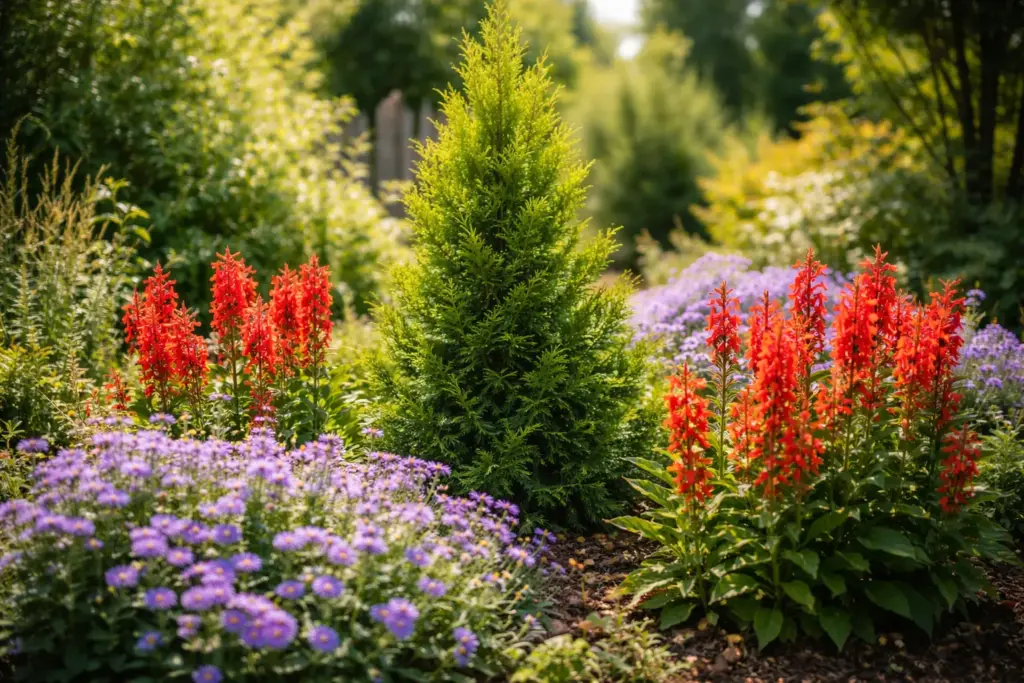
If you’re staring at plant lists and feeling overwhelmed, you’re doing it wrong—start with function. In this section, you’ll choose from top flowering options, evergreen native plants ontario garden picks for structure, and low maintenance native plants ontario garden choices that don’t require you to baby them every week.
Top Flowering Native Plants
Flowering natives are where you’ll see your garden “wake up.” But don’t aim for one hero plant; aim for a sequence—early, mid, and late-season bloom so pollinators don’t hit a food cliff in July.
Here are good categories to build around, especially if you want a reliable native plants ontario garden landscaping effect:
- Early nectar carriers: Choose spring bloomers so bees aren’t stuck in limbo right after they wake up.
- Mid-summer backbone: Add longer-bloom species to keep insect activity steady through heat waves.
- Late-season structure: Fall bloomers matter because many insects need resources before temperatures drop.
- Seed heads as winter food: Some plants stay useful even after flowering, which helps wildlife and reduces cleanup guilt.
- Different flower forms: Aim for variety—flat-topped umbels, tubular blooms, and composite flowers—so more visitor types show up.
If you want a quick sanity check, pick plants that match your soil texture (clay vs sand) and your moisture (dry bed vs intermittently damp edge). That’s how you avoid “pretty but fragile” beds.
Focus on Keystone Species for Your Native Plants Ontario Garden
Keystone species like Quercus and Solidago serve as the primary trophic foundation for Ontario’s food webs.
To move beyond a “fine” yard, your native plants Ontario garden landscaping should prioritize Keystone Species—plants that support the largest number of lepidoptera (butterfly and moth) larvae. In Ontario, this includes:
- Oaks (Quercus spp.): The heavyweights of the ecosystem, supporting over 500 caterpillar species.
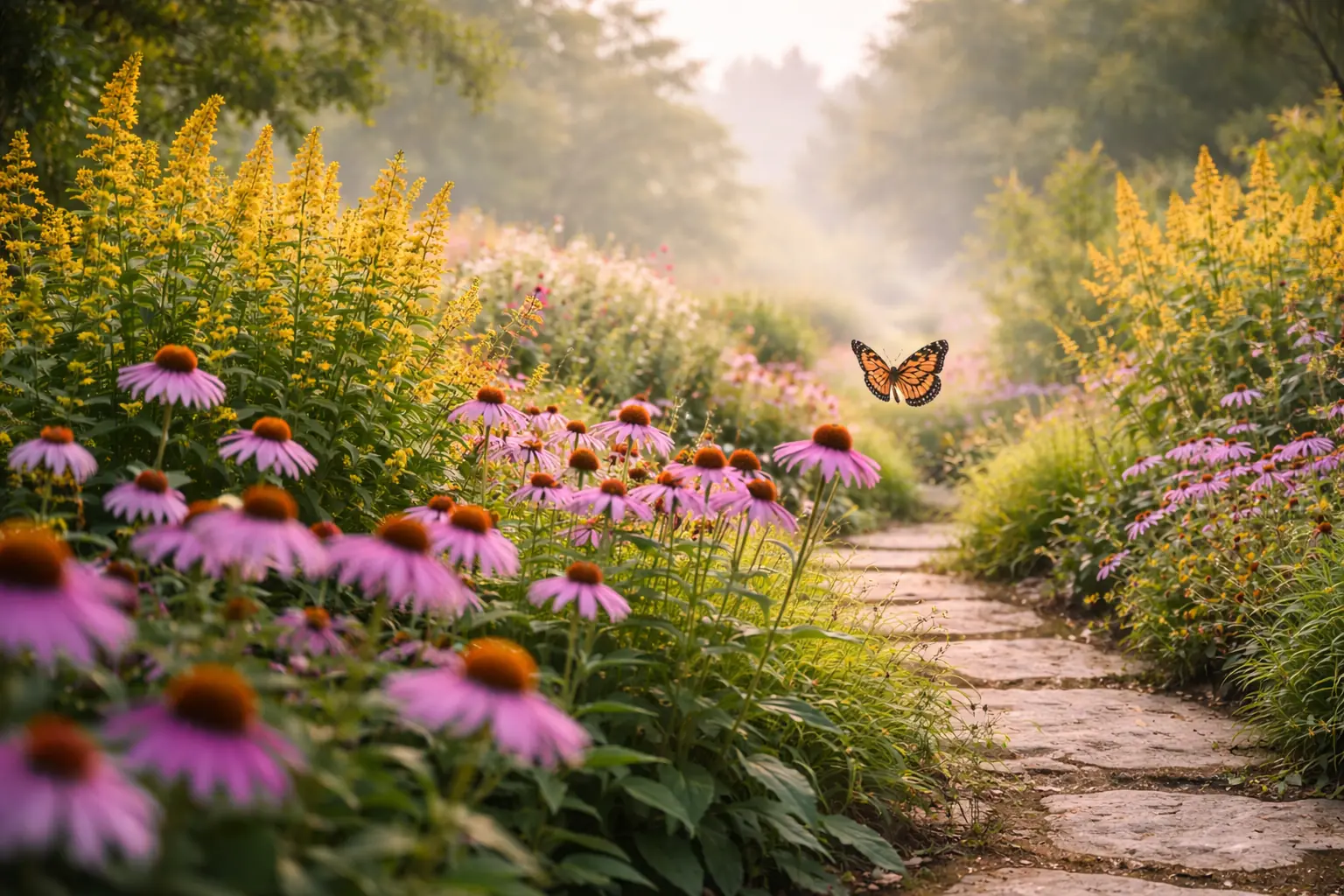
- Goldenrods (Solidago spp.): Critical late-season fuel for migrating Monarchs. Solidago flexicaulis is one of the best native plants Ontario garden choices for shaded areas.
- Native Asters (Symphyotrichum spp.): Essential for specialized bees that emerge late in the year.
Evergreen Native Plants for Year-Round Appeal
Evergreen structure is what keeps your yard from looking unfinished in November. And no, you don’t need a full wall of conifers to get impact—sprigs, mounds, and low spreading forms can do a lot.
When people search evergreen native plants ontario garden ideas, they often mean three things: winter interest, privacy screening, and ground-covering that resists bare patches. If you match the evergreen to your moisture level, you’ll avoid the common problem where it grows slowly or browns in the first winter.
Also, consider wind exposure. On open lots, evergreen leaves can dry out faster, so placement matters as much as species choice.
According to the Canadian Museum of Nature, surveying site conditions (soil type, moisture, sun and shade, and elevation) is especially important for native plant success because many species have specific requirements.
Regional Evergreen Native Plants Ontario Garden Anchors
For structured winter interest and low maintenance native plants Ontario garden stability, skip non-native boxwoods and use:
- Eastern White Cedar (Thuja occidentalis): The ultimate evergreen native plants Ontario garden choice for privacy buffers and nesting sites.
- Common Juniper (Juniperus communis): A hardy, low-profile evergreen for rocky, native plants Ontario garden full sun areas.
- Eastern White Pine (Pinus strobus): Ontario’s provincial tree, ideal for large-scale canopy layering in native plants Ontario garden landscaping.
Low Maintenance Options for Easy Care
Low maintenance native plants ontario garden picks aren’t magic—they’re species that fit your conditions so you don’t constantly intervene. Your best “maintenance saver” is choosing the right plant for the right light and then letting nature do the repetitive tasks.
One practical approach is to build around dependable categories: sturdier perennials for bulk, a few evergreen anchors for structure, and native grasses or sedges for texture. Then you’ll spend more time admiring and less time replanting.
Here’s a quick checklist to keep your expectations realistic:
- Dry-bed tolerance: If your bed bakes in July, choose plants that handle drought-like summers.
- Spacing for airflow: Don’t crowd—good spacing reduces disease pressure in humid stretches.
- Mulch timing: Use mulch to support establishment, then taper it as plants fill in.
- Patience rules: Most natives need at least one growing season to settle their roots.
- Minimal fertilizers: Too much feeding can create leafy growth that struggles later.
Designing Your Ontario Garden with Native Plants
Once you’ve got candidate plants, design is what keeps your native plants ontario garden from turning into a patchy experiment. This section shows how to create a garden plan, how to blend natives into existing landscapes, and how to think in seasons so plant pairings actually make sense.
Creating a Garden Plan
Pollinator success requires a continuous bloom succession from early spring ephemerals to late-autumn asters.
Start by mapping your yard like you’re a surveyor, not a shopper. Note the sun hours, where water runs after storms, and where frost pockets form. Then mark where you want wildlife activity—near a patio for viewing, or along a fence line where movement is safer.
Next, choose “functions” for areas: a pollinator corridor, a shrub anchor zone, a dry sunny bed, or a shaded edge that stays tidy. That function-based thinking reduces impulse buying later, because you already know what each plant patch is for.
Here’s a simple planning rhythm that works for many homeowners:
- Measure your site: Walk the property for 10 minutes at different times of day and note sun exposure and wind direction. Make quick notes—later you’ll thank yourself.
- Choose a realistic plant list: Pick 6–10 species max for the first pass, focusing on your strongest conditions (full sun, shade, or moisture band). If you add too many, maintenance and performance tracking get messy.
- Group by habitat: Cluster plants with similar water needs and similar soil preferences. This prevents “overwatering vs drought” fights inside the same bed.
- Plan for bloom succession: Include early, mid, and late flowering so you’re not relying on one month. Wildlife response usually follows your seasonal calendar.
- Stage the planting: Plant in phases over spring and early summer. That way your native plants ontario garden Landscaping rollout stays affordable and you don’t lose momentum.
- Document and adjust: Take photos every two to four weeks in the first season. If something struggles, you’ll know whether it was light, water, or soil before you blame the plant.
Rule: Don’t “sprinkle” natives everywhere. Group them by conditions so each patch can succeed—your native plants ontario garden landscaping will look intentional instead of accidental.
Tech and Tools for Native Plants Ontario Garden Landscaping
Use iNaturalist or Seek to identify visiting pollinators and track your garden’s contribution to local biodiversity databases. In 2026, the success of your native plants Ontario garden is measured by the Pollinator Visitation Rate (PVR). Using a simple digital pH tester during the planning phase ensures you choose the best native plants Ontario garden species for your specific site, preventing costly transplant failures.
Garden success in 2026 is measured by the Pollinator Visitation Rate, not biomass volume.
Incorporating Native Plants into Existing Landscapes
You don’t have to bulldoze everything. In fact, many people get the best results by converting a small area at a time—like replacing one lawn edge or upgrading one foundation bed.
When you integrate natives into existing landscapes, think in transitions. Create a gradual shift: keep the hardscape you like (stone edging, retaining walls), then blend natives into those edges using grasses, sedges, and sturdy perennials that can handle the boundary zone.
Also, check the plant label carefully. “Native” in a nursery tag doesn’t always guarantee that it matches your zone, your soil, or your available moisture. This is where your local nursery knowledge is genuinely valuable.
Seasonal Considerations and Plant Pairings
Seasonal pairing is where a native garden starts looking “designed” instead of random. You’ll want plants that work together across spring emergence, summer bloom, and fall cleanup (or lack of it).
For instance, early bloomers can be paired with mid-season anchors so pollinators never run out of options. Then fall bloomers and grasses can take over the visual story while many species set seed for next season’s cycle.
One more nuance: plants don’t just compete for light, they compete for moisture and nutrients too. If your site stays dry in midsummer, avoid pairing deep-rooted plants with shallow, thirsty ones unless you’re ready to water strategically while establishment happens.
“Plants growing together—sharing similar ecological requirements—are called a community, and replicating these communities as much as possible helps create a healthier, more naturalistic garden.”
— Canadian Museum of Nature, Gardening Educator (Create a Native-Plant Garden)

Native Plants for Specific Garden Conditions
Ontario yards vary wildly—one corner is scorching and dry, another stays cool and shaded all day. This section helps you match the right plants to full sun, shade, and water-wise conditions, so your native plants ontario garden full sun ideas (and shade picks) actually survive.
Full Sun Native Plants for Ontario Gardens
Native plants Ontario garden full sun landscapes mitigate urban heat islands through transpirational cooling.
Full sun doesn’t just mean “bright.” It usually means higher evaporation, faster soil drying, and more stress during heat waves. Your goal is to choose species that naturally handle those conditions and then establish them with smarter watering rather than constant fussing.
If you want dependable native plants ontario garden full sun landscaping, prioritize plants that can handle dry spells after establishment and can take the soil texture you have. A clay-heavy bed might need different species choices than a sandy one even if both are “full sun.”
- Dry-summer performers: Choose plants that tolerate lower irrigation once roots settle in.
- Heat-tolerant foliage: Look for species with sturdy leaves that don’t brown instantly in strong sun.
- Sun-to-partial flexibility: Some species handle full sun and still survive partial shade when afternoon heat drops.
- Deep rooting habits: Deep roots can reduce your reliance on weekly watering.
Also, keep mulch reasonable. Thick mulch piles can trap moisture near crowns and cause issues in wet seasons, so adjust based on how your bed drains.
Selecting Native Plants Ontario Garden Full Sun Species by Soil pH
When planning a native plants Ontario garden full sun layout, you must account for soil chemistry. Ontario’s geography varies from the acidic soils of the Canadian Shield to the alkaline limestone bedrock of the St. Lawrence Lowlands.
- Alkaline/Calcareous Soils: Opt for Asclepias syriaca (Common Milkweed) or Monarda fistulosa (Wild Bergamot).
- Acidic Soils: Focus on Vaccinium (Blueberries) or Cornus canadensis (Bunchberry) to ensure nutrient bioavailability.
Plant Selection Matrix: The Best Native Plants Ontario Garden Guide
To simplify your native plants Ontario garden landscaping project, use this matrix to match the best native plants Ontario garden species to your specific site conditions.
| Soil Type / Light | Full Sun (Native Plants Ontario Garden Full Sun) | Part Shade / Shaded Areas |
| Dry / Sandy | Butterfly Milkweed (Asclepias tuberosa), Wild Bergamot (Monarda fistulosa) | Common Juniper (Juniperus communis), Zig-zag Goldenrod (Solidago flexicaulis) |
| Moist / Loam | Dense Blazing Star (Liatris spicata), Swamp Milkweed (Asclepias incarnata) | Wild Geranium (Geranium maculatum), Eastern White Cedar (Thuja occidentalis) |
| Clay / Heavy | New England Aster (Symphyotrichum novae-angliae), Grey-headed Coneflower (Ratibida pinnata) | White Snakeroot (Ageratina altissima), Pennsylvania Sedge (Carex pensylvanica) |
Shade-Tolerant Native Plant Selections
Shade is tricky because it isn’t just about light—it’s also about moisture and soil life. In many yards, shady areas stay damp longer in spring, then dry out under tree canopies by summer.
Shade-tolerant native plant selections work best when you choose plants that handle that cycle. If your shade area is dry underneath trees, you’ll want natives that tolerate those “tree root” conditions rather than ones that prefer steady moisture.
According to the Canadian Museum of Nature, layering (including canopy, understorey, and herbaceous cover) helps create more naturalistic, resilient native-plant gardens.
One more reality check: shade gardens often need patience. You might not see rapid growth in the first season, but you can still build long-term stability if you set the plants up right.
Rule: In shade, match plants to moisture patterns, not just light levels. A dry shade bed needs different natives than a consistently damp edge.
Water-Wise Native Plants for Drought-Prone Areas
If your soil turns powdery by late June, you’ll save time by treating that zone like a drought project from day one. Native plants can handle limited water better than many people expect, but only when you stop forcing them into the wrong conditions.
A University of Florida IFAS news release about a 2-year study reported that native plants generally outperformed non-native ones in plant size and flower density under both full and partial irrigation levels. ([blogs.ifas.ufl.edu](https://blogs.ifas.ufl.edu/news/2024/10/15/uf-study-native-plants-outperform-non-native-species-for-growth-and-floral-abundance/?utm_source=openai))
In real yards, you can use that idea without copying a study exactly. Start with species that tolerate your dry patterns, water enough to establish in year one, and then back off gradually. You’re not “saving water” by doing nothing—you’re saving water by doing the right thing once.
- Start with drainage: If water sits after storms, you’ll need species that tolerate wet periods too.
- Use deep, infrequent watering: This encourages stronger roots instead of surface dependence.
- Pick drought-fit bloomers: Flowers that keep going under stress keep your wildlife active when it matters.
- Reduce competition early: Weed during establishment so slower natives aren’t forced to fight grass roots.
Landscaping Ideas Using Native Plants
Now for the fun part: turning your plant list into a yard that looks like it belongs in a living landscape, not a brochure. In this section, you’ll explore wildlife-friendly garden designs, how to create a pollinator paradise, and how to incorporate water features and native plant buffers without creating a mosquito zone.
Wildlife-Friendly Garden Designs
Wildlife-friendly doesn’t have to mean “wild and messy.” It can mean clear structure: cover, food, nesting opportunities, and a layout that keeps visitors safe.
And yes, you’ll notice wildlife response over time. In a study in the Proceedings of the Indiana Academy of Science on native versus non-native plantings in urban parking lot islands, researchers monitored birds, arthropods, and flower visitors across native and non-native landscaped islands. ([journals.indianapolis.iu.edu](https://journals.indianapolis.iu.edu/index.php/ias/article/view/23790/22928?utm_source=openai))
That kind of result is why design matters: if your plants only provide nectar but not structure, the yard feels “one-note.” Add layers—groundcover, mid-layer perennials, and a few shrubs—to give wildlife places to move and feed.
- Layer your habitat: Groundcovers help smaller species, while taller perennials add movement and landing spots.
- Plan for nesting: Some natives provide seed heads and stems that support small insects through the season.
- Use edges intentionally: Wildlife loves boundary zones because they offer cover and access to food.
- Keep some “mess”: Leaving seed heads until spring reduces the need for constant cleanup and supports insects.
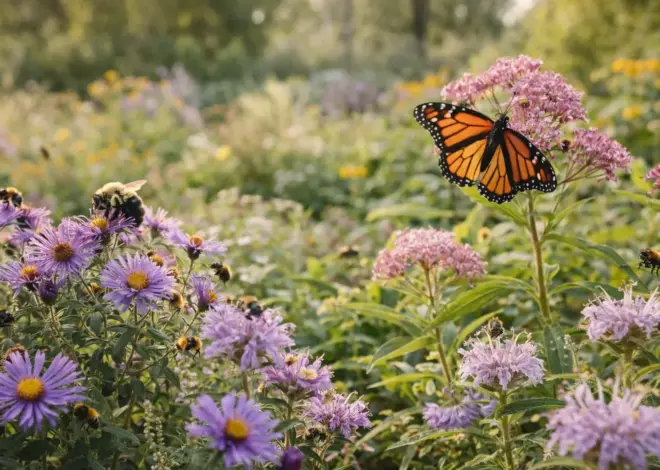
Creating a Pollinator Paradise
A pollinator garden isn’t a single flower bed—it’s a calendar of resources. If you plant only what blooms in June, you’ll see the activity peak, then drop off when your blooms end. The fix is planting for succession: early, mid, and late-season nectar and pollen.
OSU Extension’s reporting on native plant visitation reinforces that pollinator preferences can vary by plant and insect, so your best results come from choosing multiple natives rather than banking on one “sure thing.” ([news.oregonstate.edu](https://news.oregonstate.edu/news/native-plants-attract-more-pollinators-cultivars-osu-study?utm_source=openai))
| Criterion | Option A: Single-plant focus | Option B: Staggered native patches |
|---|---|---|
| Bloom timing coverage | You’ll get a strong peak for a short window, then the bed goes quiet. | You keep resources available across more weeks, so visitors keep coming back. |
| Wildlife resilience | If that plant struggles in your soil year-to-year, the whole bed falters. | If one species underperforms, other patches can still feed insects and help the yard recover. |
| Maintenance load | You may be tempted to “fix” gaps by replacing plants repeatedly. | You’re less likely to chase empty weeks, because there’s usually something else blooming. |
| Design look | Great in photos—less great when the single star fades. | More layered and consistent, which reads as native plants ontario garden landscaping instead of random planting. |
In most Ontario yards, Option B is the safer bet because it treats your garden like a habitat over time, not a one-time performance. You’ll still want your plants to match your site, but staggered patches make the whole system more reliable.
Incorporating Water Features and Native Plant Buffers
Water features can support wildlife, but only if you design them thoughtfully. If you add a pond without plant buffers, you can end up with algae problems or stagnant edges. Native plant buffers help by stabilizing soils, filtering runoff, and giving animals safe resting zones.
Think of buffers as living filters: native sedges, rushes, and moisture-tolerant perennials can help manage how water spreads across your yard. And if you’re not ready for a pond, even a shallow rain-garden style basin can work.
- Match plants to water depth: Choose wet-edge plants for edges and drier-slope plants farther out.
- Use native structure: Taller emergent plants can break up water movement and reduce erosion.
- Design for overflow: If heavy rain hits, plan where water goes so it doesn’t eat your beds.
- Keep edges accessible: Wildlife needs safe landing and escape routes—steep sides often fail.
- Don’t overdo stagnant water: Circulation and plant coverage matter, even in small containers.
“The goal is to identify native perennials that don’t require a great deal of care, provide good ornamental value, and offer good forage for native pollinators.” — University of Guelph Arboretum, Micro-Climate Pollinator Research Gardens (project description).
Caring for Your Native Plant Garden
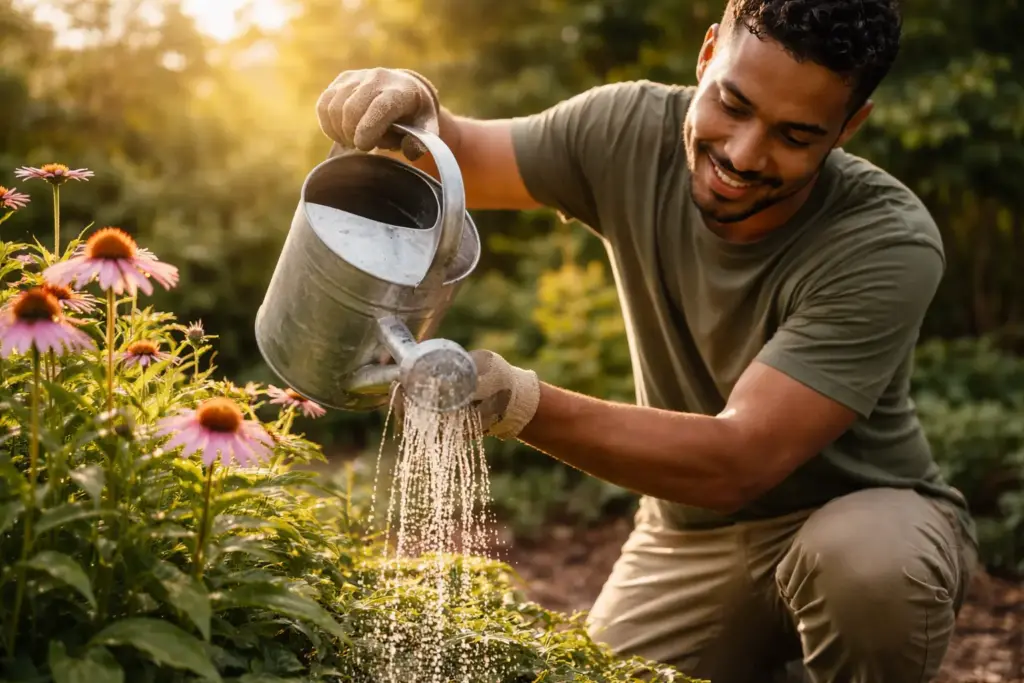
You don’t have to hover over natives, but you do need to manage establishment and the “first season rules.” This section covers watering and fertilization basics, pruning and maintenance guidelines, and how to handle common pests and diseases without panicking.
Watering and Fertilization Tips
Watering is where most people either overhelp or underhelp. Overwatering can push plants into shallow growth, while underwatering too early can stop root systems from forming at all. Your job is to water deeply during establishment, then taper.
Fertilizer is the other common trap. Many gardeners assume “more growth” means better health, but in native plants ontario garden maintenance, you’re usually aiming for stable roots and resilient growth—not fast, watery softness.
Rule: Fertilize less, observe more. Feed only if you’ve confirmed a deficiency, because natives usually don’t need heavy supplementation.
- First-year watering: Check soil moisture regularly and water when the top layer dries, not on a calendar.
- Adjust for weather: Hot, windy stretches need different watering than cool, cloudy weeks.
- Use mulch strategically: Mulch helps retain moisture around crowns, but don’t bury the base.
- Skip high-nitrogen fertilizers: They can encourage soft growth that struggles in late-season stress.
- Watch plant signals: Yellowing can mean many things—light, moisture, or root issues—not just “needs food.”
Pruning and Maintenance Guidelines
Pruning natives isn’t about sculpting them into perfect shapes. It’s about helping them recover and managing seed heads and stems in a way that supports wildlife and keeps beds clean where you need them clean.
In late winter or early spring, you can cut back perennials before new growth ramps up. But don’t feel forced to remove everything right away—leaving some structure through the cold months often supports beneficial insects.
According to the University of Guelph Arboretum, micro-climate pollinator research gardens test native perennials for adaptability to residential conditions and for the types of pollinators that visit them.
Also, weed like it’s part of the planting plan. In year one, weeds steal light and moisture, and they’re harder to remove once natives are larger.
High-density native planting creates a living mulch, suppressing invasive species through resource competition.
However, manual monitoring remains essential during the first three years of your native plants Ontario garden landscaping project to ensure these aggressive non-natives don’t outcompete your slow-growing perennials.
Dealing with Common Pests and Diseases
Native plants aren’t immune to pests and diseases—just like people, they have tolerances. Usually, the healthiest outcomes happen when plants are spaced properly, placed in the right light, and watered correctly.
And if you’re thinking “but I didn’t have this problem before,” remember that many pests respond to stress. When you fix stress factors—like poor drainage, crowding, or wrong sun exposure—the pest pressure often drops naturally.
Here’s a practical, low-drama approach that many gardeners can follow:
- Inspect weekly: Look at leaf undersides and new growth; early spotting is easier than late removal.
- Remove problem bits: Pinch off small infestations before they spread to neighboring plants.
- Improve airflow: If foliage stays wet, adjust spacing and watering timing.
- Use targeted methods: If treatment is needed, choose the least disruptive option first.
- Accept minor loss: In a healthy native ecosystem, some damage is part of the balance.
“Every time you plant a native plant, you’re building a connection between the living world and your own backyard.” – Douglas W. Tallamy, Professor of Entomology and Wildlife Ecology, University of Delaware (Nature’s Best Hope; interview reporting)
Resources and Further Reading
Once you’ve planted, you’ll want ongoing support—local knowledge beats generic lists every time. This section points you to practical places to buy and learn, from local nurseries and plant sales to online plant databases and community programs that keep your skills sharp.
Local Nurseries and Plant Sales
In Ontario, local nurseries and native plant sales often stock plants with better local sourcing or at least better guidance. When you talk to the staff, ask for species that match your conditions: full sun versus shade, dry versus damp, and whether the plant is appropriate for your specific soil type.
If you can, bring photos of your site and measurements of sun exposure. Most people underestimate how much microclimate affects native plants ontario garden landscaping success.
- Ask about local provenance: Seed-source and region matter, especially for hardy establishment.
- Request mature size: Spacing based on adult width beats guessing from nursery pots.
- Confirm moisture needs: A “dry” label can mean different things depending on the grower.
- Get planting dates: Timing in Ontario can swing with weather; ask what their past seasons show.
Online Guides and Plant Databases
Online tools are great for narrowing down candidates, but use them like a compass, not like a GPS. Cross-check your choices with multiple sources and match them to your exact conditions.
When you search, focus on the same anchors we’ve been using: sun, shade, moisture level, and whether you need evergreen native plants ontario garden structure or low maintenance native plants ontoria garden stability.
Community Programs and Workshops
Workshops and community groups make a difference because you learn from local successes and failures. If you join a native plant society, you’ll hear what worked in sandy yards, what died in clay, and which species bounced back after a wet spring.
Also, these communities often share seed swaps, volunteer planting days, and mentorship. It’s not “free landscaping,” but it does lower your learning curve a lot.
Ready to transform your yard but not sure where the first shovel goes? Don’t guess—measure. Download our functional site-audit checklist to map your garden’s DNA before you head to the nursery.

FAQ
What are native plants ontario garden?
Native plants ontario garden refers to species that naturally occur in Ontario regions and fit local seasonal patterns. They’re more likely to support local insects and birds when planted for the right sun and moisture conditions.
How to start a native plants ontario garden landscaping plan?
Start by mapping sun and moisture, then pick a small set of native plants that match those conditions. Build bloom succession across seasons so pollinators have food throughout the year.
Is it true that evergreen native plants ontario garden choices require less care?
Yes, in many cases they need less seasonal “chasing” than short-lived plants, but they still need correct placement. If the site is too dry or too wet for the species, you’ll still see problems.
Native plants ontario garden full sun vs shade: which is easier?
It depends on your soil. Full sun can be easier if your bed drains well; shade can be easier if it stays consistently moist. Both work—your site conditions decide.
Where to find low maintenance native plants ontario garden options?
Local nurseries, native plant sales, and community workshops are usually the best places to ask. You’ll get guidance on low maintenance options that match your specific light and moisture.
Which part of your yard feels hardest—full sun, shade, or the weird wet spots? Tell me what’s going on in your space, and I’ll suggest a smarter direction you can try next season.
Sources
- Oregon State University (Extension/News), 2025 (reported from multi-year OSU Garden Ecology Lab study)
- University of Florida IFAS News, 2024 (2-year study report on water-limited conditions)
- Proceedings of the Indiana Academy of Science (study on native vs non-native plantings), year as published on journal page