Potted Plants That Attract Hummingbirds
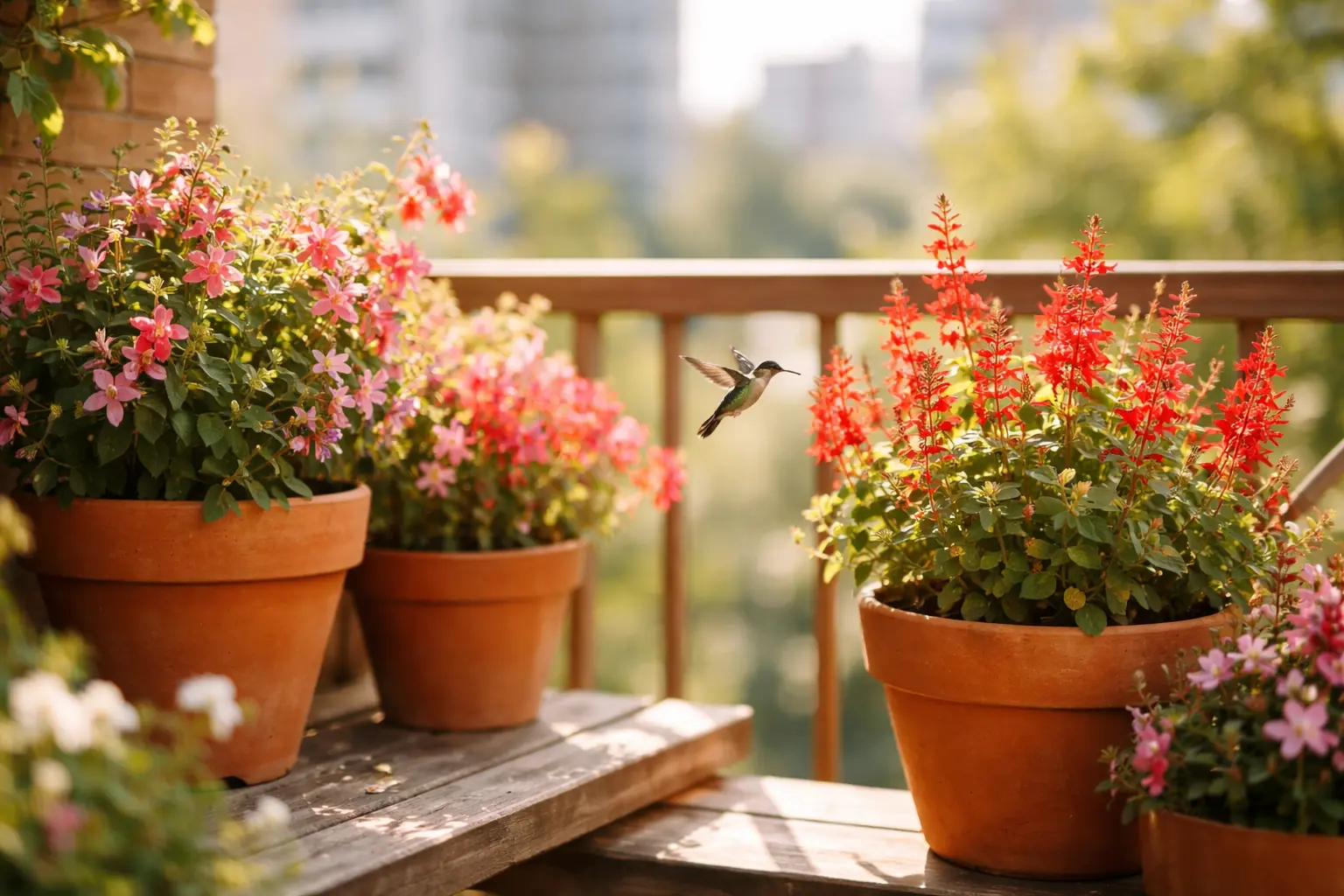
Your patio can look lush and still feel strangely lifeless—that’s the frustration. If you want potted plants that attract hummingbirds, the trick isn’t buying the brightest basket at the garden centre; it’s choosing nectar-rich blooms, smart placement, and plants that actually suit your climate. In 2026, that matters more than ever because hot spells, odd springs, and pricey annuals make bad plant choices expensive fast. Get the mix right, though, and fuchsia, salvia, hanging baskets, and Canadian-hardy options can turn even a small balcony into a steady stop for hummingbirds.
Introduction to Hummingbird-Friendly Potted Plants
Container gardening gives you control, which is exactly what hummingbirds need from a small space. This section covers why pots work so well, plus the real payoff you get when these birds start visiting regularly.
Discover which potted plants that attract hummingbirds deliver the most nectar. This guide covers heat-tolerant varieties like Cuphea and Salvia, ensuring your patio stays busy with activity all summer long.
Why Choose Potted Plants for Hummingbirds?
Pots let you move nectar sources where hummingbirds will actually see them—near a deck, beside a railing, or just outside a kitchen window. That flexibility matters when wind, shade, or an early cold snap throws off your original plan. And if your yard is tiny, rented, or mostly paved, potted plants that attract hummingbirds can still give you a workable setup without tearing up the whole landscape.
- Mobility: You can shift containers as bloom timing changes or as the sun angle moves through summer.
- Control: Soil mix, drainage, and watering stay in your hands, which makes finicky bloomers easier to manage.
- Small-space value: A balcony, porch, stoop, or condo terrace can support hummingbird visits if the flowers are visible and nectar-rich.
- Season extension: When frost threatens, tender plants can be moved indoors or to shelter instead of being lost overnight.
Generic red blooms attract human eyes; deep, tubular nectar flowers sustain migratory hummingbirds.
Benefits of Attracting Hummingbirds to Your Garden
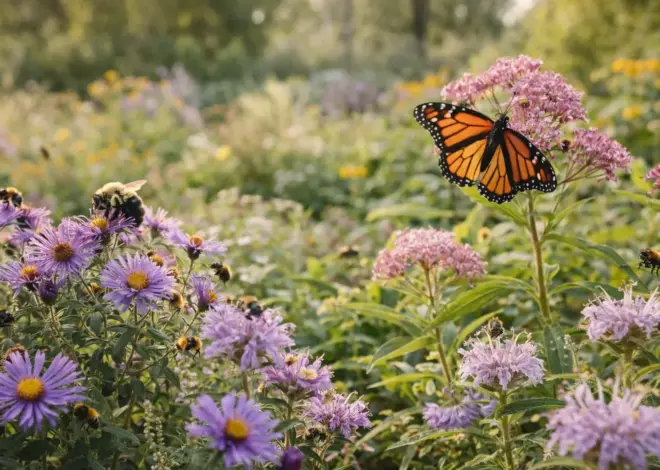
There’s the obvious benefit—they’re beautiful—but that’s not the whole story. Hummingbirds also bring movement, pollination, and a sense that your garden is doing something useful, not just decorative. Bird-friendly containers can also pull double duty in a native-leaning wildlife garden, especially when paired with perennials, herbs, and pesticide-free care.
Audubon reported in 2020 that its Hummingbirds at Home study, based on 4,801 hummingbird and plant surveys from 744 locations, confirmed hummingbirds visited gardens with a wide variety of plants and a high number of native plants.
“This report confirmed that hummingbirds visit gardens with a wide variety of plants and a high number of native plants.” — Kathy Dale, Audubon director of science technology, quoted by Audubon in 2020
That lines up with what home gardeners see in practice: more flower variety usually means more repeat visits, especially during migration windows.
Top Potted Plants That Attract Hummingbirds
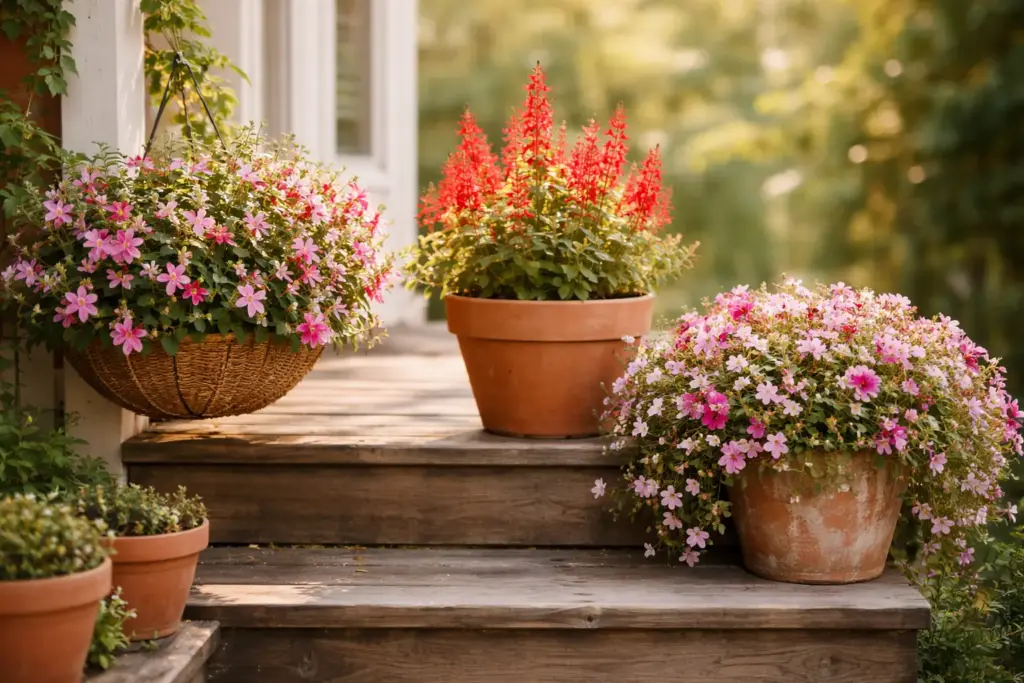
Some flowers pull hummingbirds in almost instantly, while others look pretty to us and do almost nothing for them. Here are three dependable potted plants that attract hummingbirds, with the catch, the care, and the best use for each.
Fuchsia: A Hummingbird Magnet
Fuchsia is one of the classic potted plants that attract hummingbirds for a reason: the dangling blooms are built for long beaks, and the plant flowers heavily in cool to mild weather. It shines in part shade, which makes it unusually useful for porches that never get harsh afternoon sun. The downside? It’s thirsty, and in a heat wave it can sulk fast.
If you’re growing in Southern Ontario, coastal British Columbia, or another milder pocket, fuchsia can be one of your best hanging plants that attract hummingbirds. In hotter inland spots, give it morning sun and afternoon protection.
Salvia: Colorful and Irresistible
Salvia is the reliable workhorse. It handles containers well, blooms hard, and comes in reds, pinks, purples, and bi-colours. For hummingbirds, red salvias are the head-turners, but many varieties with tubular flowers work. If you want potted plants that attract hummingbirds and don’t require constant fussing, salvia is usually the safer bet than fussier basket plants.
Before choosing a cultivar, it helps to compare how these plants behave in containers rather than in garden beds.
| Criterion | Fuchsia | Salvia |
|---|---|---|
| Best light | Part shade to bright indirect light | Full sun to light shade |
| Heat tolerance | Lower; struggles in prolonged heat | Higher; usually steadier in summer |
| Water needs | Consistently moist soil | Moderate; likes drainage between waterings |
| Container use | Ideal for baskets and shaded pots | Great for upright patio containers |
| Hummingbird appeal | Excellent in cool-season bloom flushes | Excellent through long summer bloom |
If you want one simple winner for beginners, salvia usually edges out fuchsia because it forgives missed waterings and temperature swings a bit better.
Petunia: Easy to Grow and Maintain
Petunias aren’t always the first plant bird gardeners mention, yet they’re useful because they’re easy to find, bloom for ages, and work in mixed containers. The best choices are older-style or more nectar-accessible forms rather than overly doubled, highly bred flowers. Opt for high-UV reflectance cultivars like ‘Super-tunia’ which are visually louder to hummingbirds even in hazy or smoky summer conditions.
- Use them as fillers: They bulk out mixed pots while your main nectar plants handle most of the attraction.
- Deadhead when needed: Some modern varieties self-clean, but older ones bloom better with regular tidying.
- Pair with stronger performers: Petunias work well beside salvia or calibrachoa in sunny containers.
Before heading to the local nursery, make sure you don’t waste money on the wrong soil or inaccessible blooms. Use our printable checklist to gather exactly what you need for a successful setup.
Hanging Plants That Attract Hummingbirds
Hanging baskets solve a visibility problem. Flowers at eye level or slightly above often catch a hummingbird’s attention faster than low pots tucked by a wall. This section looks at the best basket choices, how to keep them alive, and where people usually shop for them.
Explore the best plants for hummingbirds Canada gardeners can rely on. From Bee Balm to Weigela, see how these hardy options thrive in cooler climates and provide essential food for migrating birds.
Best Hanging Plant Options
The best hanging plants that attract hummingbirds usually have dangling or outward-facing tubular flowers and a long bloom period. Fuchsia is the headline act, sure, but it isn’t alone. Nasturtium, trailing lobelia in cool regions, cuphea, and some calibrachoa mixes can all earn space in a hummingbird setup.
- Fuchsia: Best for part shade and cool-summer areas. The blooms hang naturally where hummingbirds can hover and feed.
- Cuphea: Often overlooked, but the tube-shaped flowers make real sense for hummingbirds in warm, sunny conditions.
- Nasturtium: Loose, informal, and useful in larger baskets or cascading planters, especially if you like a cottage-garden look.
- Calibrachoa: Not every variety is equal, though mixed baskets can add season-long colour around stronger nectar plants.
Care Tips for Hanging Plants
Basket care is where many good intentions die. Hanging containers dry out faster, heat up faster, and burn through nutrients faster than ground plantings. So if you’re using hanging plants that attract hummingbirds, you need a routine, not wishful thinking.
- Choose a basket big enough to hold moisture. A standard 10 or 12-inch basket is now insufficient due to 2026 heat dome patterns. Switch to 14-16 inch deep-reservoir pots to protect soil microbiology from rapid baking.
- Use a quality potting mix, not garden soil. Potting mix drains well but still holds moisture, which is the balance basket plants need to keep blooming.
- Water based on weather, not habit. In mild spells, every couple of days may work. In windy heat, some baskets need water morning and evening.
- Feed lightly and regularly. Flowering baskets in active growth often do better with diluted fertilizer every week or two than with one heavy application.
- Trim tired growth. A quick haircut can restart bloom on leggy baskets and make the whole display look less worn out.
Automate where possible with solar-powered drip kits. This ensures the ‘steady stop’ you’ve promised for hanging plants that attract hummingbirds stays consistent even when you aren’t home to water twice daily.
Soil Microbiology and Moisture Retention
In 2026, standard potting mix isn’t enough. Incorporate mycorrhizal fungi to boost root resilience and use peat-free coconut coir blends. These sustain the beneficial microbes that keep nectar-heavy plants blooming during prolonged dry spells.
Where to Buy Quality Hanging Plants
Most people start at big-box stores because they’re convenient. Fair enough. But for hanging plants that attract hummingbirds, local nurseries often give better cultivar names, healthier roots, and staff who actually know which plants perform in your region. That matters when your summer is humid in Ontario, windy in Alberta, or cool and damp on the B.C. coast.
Forced greenhouse blooms fade rapidly; vigorous, healthy root systems guarantee season-long nectar supplies.

Potted Plants for Hummingbirds in Canada
Canadian gardeners have a different puzzle: short seasons, regional frost swings, and a huge spread in summer conditions from Victoria to Halifax. Targeting the Ruby-throated hummingbird in the East or the Rufous in the West requires slightly different timing for your potted plants that attract hummingbirds, but nectar-rich tubes remain the universal language for both. This section focuses on plants for hummingbirds Canada gardeners can actually use, plus how to protect container plants when winter hits hard.
Climate Considerations for Canadian Gardens
Canada isn’t one garden zone wearing a big coat. Maritime humidity, Prairie wind, B.C. coastal mildness, and northern short seasons all change what works in containers. Tender tropicals may thrive as annuals in Toronto and fail badly in a colder inland spring if planted too soon. And root systems in pots freeze faster than plants in the ground—sometimes by a full zone or more in practical terms.
A 2022 Virginia Tech study of 25 ornamental landscape plants found that pollinator attractiveness can vary dramatically among garden plants, reinforcing the need to choose flowering varieties for ecological value, not just appearance.
Best Plant Varieties for Canadian Conditions
When people search for plants for hummingbirds Canada gardens can support, they usually need a mix of hardy natives, adaptable annuals, and a few container-friendly perennials. Good candidates include bee balm, cardinal flower, native penstemons where suited, scarlet runner bean in large pots, salvia, and fuchsia as a seasonal basket plant. In cooler areas, don’t ignore native-leaning options just because they’re less flashy at the garden centre.
Tender tropicals provide seasonal aesthetics; hardy native perennials deliver resilient, climate-adapted hummingbird forage.
Always cross-reference your selection with the Natural Resources Canada Plant Hardiness Zones to find the best plants for hummingbirds Canada can support. For example, Cardinal Flower thrives in Zone 3, while Salvia ‘Black and Blue’ must be treated as a strict annual in most provinces.
- Bee balm: Bold colour, strong hummingbird appeal, and good value in larger containers with steady moisture.
- Cardinal flower: Excellent for moisture-retentive pots; especially useful if you can keep soil from drying out.
- Salvia: One of the easier non-native annual choices for sunny patios across much of Canada.
- Scarlet runner bean: Productive, decorative, and surprisingly effective on a trellis in a big pot.
Tips for Overwintering Potted Plants in Canada
Overwintering is where optimism meets January. Some plants need indoor shelter; others can survive in an unheated garage, cold frame, or sheltered wall if the pot is insulated. For plants for hummingbirds Canada growers want to keep year after year, the key is matching strategy to plant type rather than treating all containers the same.
If a perennial is hardy only to your zone in-ground, it may not be hardy in a pot. Wrap containers, cluster them out of wind, or move valuable specimens somewhere cold but protected. Your mileage may vary—a Vancouver balcony is not a Winnipeg backyard.
“Even if plants may not be native to an area or ZIP code, they can be native to a migratory hummingbird’s range.” — John Rowden, Senior Director of Bird-Friendly Communities at Audubon, quoted by Audubon in 2020
How to Create an Ideal Environment for Hummingbirds
Flowers matter, but placement and garden habits matter just as much. Here’s where potted plants that attract hummingbirds go from pretty decor to an actual feeding corridor, even in a small urban space.
Placement of Potted Plants
Put containers where hummingbirds can spot them from the air. That usually means layered heights, visible colour blocks, and at least some open approach space so the birds don’t have to thread through clutter. Railings, deck corners, and grouped patio pots work well; dark hidden corners don’t.
Scattered patio pots remain unnoticed; clustered, high-visibility container setups create strong hummingbird corridors.
Smart Irrigation and Micro-Climates
Mitigate the Urban Heat Island effect by using self-watering inserts or terracotta ‘Oya’ reservoirs. On high-heat days, the evaporation from these tools creates a cooling micro-climate that prevents delicate hanging plants that attract hummingbirds, especially fuchsia, from dropping their blooms prematurely.
Supplementing with Feeders
Artificial feeders merely supplement diets; diverse, nectar-rich floral containers establish primary natural habitats.
But they should support your planting, not replace it. Keep feeders clean, shaded when possible, and filled with plain sugar water at the standard four-parts-water to one-part-sugar ratio. No dye. Ever.
Audubon noted in its hummingbird yard guidance, updated from its community-science program running from 2013 to 2021, that nectar-rich native flowers are central because sugary nectar supplies fast energy and flowers make up about 90 percent of a hummingbird’s diet.
Maintaining a Healthy Garden Ecosystem
Nectar provides fast energy; soft-bodied insects supply essential protein for nesting hummingbirds.
Hummingbirds don’t live on sugar alone. They also eat tiny insects and need safe perches, clean water, and pesticide-light surroundings. That’s why the best potted plants that attract hummingbirds are part of a broader little ecosystem, not isolated ornaments.
- Skip routine pesticide sprays: They can reduce the small insects hummingbirds rely on for protein.
- Add a shallow water feature: Even a mister or gentle dripper can make a small space feel more welcoming.
- Provide perches: Nearby shrubs, twiggy stems, or a small trellis give hummingbirds a place to rest and watch.
The Protein Factor: Soft-Bodied Insects
Potted plants that attract hummingbirds visit your patio for more than just sugar; they also need soft-bodied insects like aphids and gnats for protein. Instead of using broad-spectrum soaps, allow a small ‘sacrifice zone’ in your containers to host these insects, providing a complete nutritional cycle for nesting mothers.
If you are looking to expand your wildlife sanctuary beyond pollinators, learning how to attract and feed larger backyard birds can bring a completely different, vibrant energy to your outdoor space.
Where to Purchase Potted Plants and Supplies
Buying the right plant is half gardening and half detective work. This section looks at online sellers, local nurseries, and how to compare price with quality so you don’t pay premium money for weak stock.
Online Retailers for Hummingbird Plants
Online shopping works best when you want specific cultivars, native species plugs, or hard-to-find plants for hummingbirds Canada gardeners may not see locally. Check shipping windows, pot size, and whether the seller lists hardiness zones clearly. If a listing is vague, that’s a warning bell, not a mystery to ignore.
For internal inspiration, readers on Colborne Village might also explore native plants for pollinators and balcony wildlife garden ideas before ordering.
Local Garden Centers and Nurseries
Local nurseries still have the edge if you want strong roots and practical advice. Staff can tell you which salvias shrug off local weather, which fuchsias melt in July, and whether a so-called hummingbird plant is actually worth container space. That kind of detail saves money in a hurry.
University of Oklahoma researchers reported in 2025 that they observed 879 pollinators in three urban botanical gardens in Oklahoma City, a reminder that urban garden plant choice can have measurable effects on wildlife activity.
Comparing Prices and Quality
Cheap plants can be expensive if they fail in two weeks. Compare root health, branching, pest damage, and cultivar labeling before looking only at bloom count. For potted plants that attract hummingbirds, a smaller plant with strong structure often catches up fast once transplanted into a better container.
- Check the roots: White or light roots are usually a better sign than dark, circling masses.
- Read the cultivar tag: Specific names help you research height, habit, and bloom season later.
- Look for fresh growth: New leaves suggest active health, not just a plant coasting on greenhouse conditions.
Additional Tips and Considerations
Once your containers are blooming, the small choices start to matter: pest control, plant combinations, and the mistakes that quietly cut flower production. This is where a hummingbird setup either settles in—or fizzles.
Pest Control and Plant Health
Aphids, whiteflies, and spider mites love stressed container plants. Strong watering habits, airflow, and regular inspection beat panic spraying most of the time. If you do need treatment, start with the least disruptive option and avoid coating open blooms when hummingbirds are active.
Combining Plants for Maximum Attraction
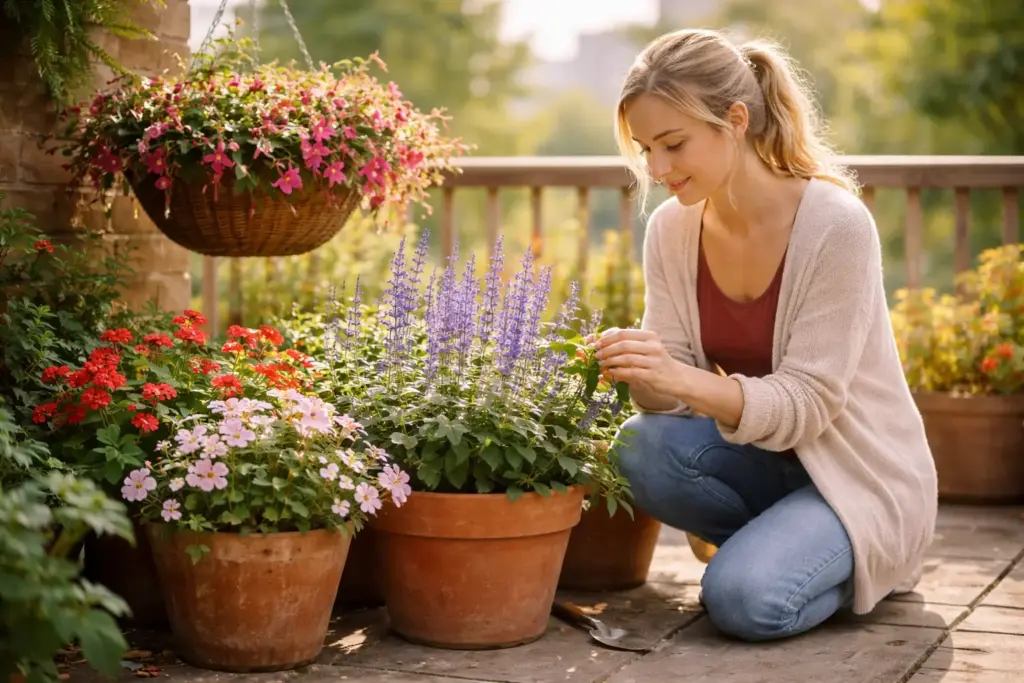
One pot can work. A cluster works better. Mix upright bloomers like salvia with trailing basket plants and one longer-season backup so something is always flowering. Most guides say “plant red flowers,” but colour alone won’t rescue a poor nectar plant. Structure and bloom continuity carry more weight.
For more ideas, related reading such as best native flowers for birds can help you build out a fuller wildlife-friendly planting plan.
Common Mistakes to Avoid
Generic pollinator tags mislead buyers; specific nectar-production metrics determine actual hummingbird attraction.
The second? Letting containers dry out just as buds form. And the third is leaning too hard on feeders while ignoring flowers. Potted plants that attract hummingbirds work best when the whole setup feels natural, visible, and seasonally steady.
- Using tiny containers: Small pots dry too fast and limit root growth, especially for heavy bloomers.
- Choosing double flowers only: Some highly bred blooms are less accessible and less rewarding for hummingbirds.
- Planting all one bloom period: A huge flush in June is nice, but gaps in July and August reduce repeat visits.
- Ignoring region: What works in coastal British Columbia may flop in a Prairie heat-and-wind combo.
If you’re experimenting with potted plants that attract hummingbirds this season, which plant has surprised you most—fuchsia, salvia, cardinal flower, or something less obvious? Your experience might help another gardener avoid an expensive miss.
FAQ
What is the best type of container for hummingbird flowers?
A medium to large container with strong drainage is usually best. It gives potted plants that attract hummingbirds enough soil volume to hold moisture and support steady blooming.
How to make a small balcony attractive to hummingbirds?
Group visible nectar plants at different heights, add one feeder, and keep blooms going across the season. Hanging plants that attract hummingbirds are especially useful on balconies because the flowers sit where birds can spot them quickly.
Is it better to use feeders or flowers for hummingbirds?
Yes, flowers are usually the better foundation. Feeders help during lean bloom periods, but potted plants that attract hummingbirds provide a more natural food source and support a healthier garden setup overall.
Hanging baskets vs upright pots for hummingbirds: which is better?
Neither is always better on its own. Hanging baskets work well for fuchsia and other trailing flowers, while upright pots suit salvia, bee balm, and larger plants for hummingbirds Canada gardeners often grow in sunny spots.
Where to buy plants for hummingbirds in Canada?
Start with local nurseries that know your zone, then use reputable online native-plant sellers for harder-to-find species. For plants for hummingbirds Canada gardeners want to keep long term, accurate hardiness information matters as much as price.
Creating a vibrant sanctuary with potted plants that attract hummingbirds turns any small balcony into a vital nectar stop. By incorporating hanging plants that attract hummingbirds, like fuchsia or cuphea, you provide eye-level access for these tiny visitors. Even in harsher climates, hardy plants for hummingbirds Canada gardeners trust—such as bee balm—ensure your patio remains a reliable, lush corridor all season long.
Sources
- Audubon, Hummingbirds Are at Home When We Plant Native Plants (2020)
- Audubon, How to Create a Hummingbird-Friendly Yard
- Virginia Tech / MDPI, If You Grow It, They Will Come (2022)
- University of Oklahoma, Student-Led Research Suggests Urban Gardens Key to Pollinator Resilience (2025)
- Audubon / BirdNote, Create a Hummingbird Haven With Native Flowering Plants (2017)