Best Bird Feeders Canada: A Comprehensive Buying Guide
Are you struggling to find the best bird feeders Canada has to offer for our notoriously harsh winters and unpredictable summers? You aren’t alone. Cheap acrylic shatters; eco-friendly poly-lumber withstands Canadian Hardiness Zone deep freezes, leaving your backyard completely empty otherwise.
If your goal is surviving freezing weather, heavy-duty eco-friendly poly-lumber or UV-stabilized polycarbonate is your answer. If your goal is deterring aggressive squirrels, weight-activated metal housings from local brands are the recommendation. (Yes, really). We are going to break down exactly what works, what breaks, and how to build a thriving backyard sanctuary without wasting your money on outdated gimmicks. Let’s dig into the exact hardware, local Canadian biosecurity rules, and nutrition you need to succeed.
- Unprotected feeders feed squirrels; weight-calibrated Brome baffles ensure zero rodent access.
- Planned obsolescence drains budgets; powder-coated Lee Valley hardware guarantees lifetime performance.
Understanding Different Types of Bird Feeders
Before spending a single dime at a local hardware store, you must understand the basic architectural categories of backyard feeding stations. Buying randomly usually results in wasted seed, messy patios, and incredibly frustrated birds. Let’s look at the primary designs on the market today and figure out exactly which one matches your specific property layout and target species.
Tube Feeders: Ideal for Small Birds
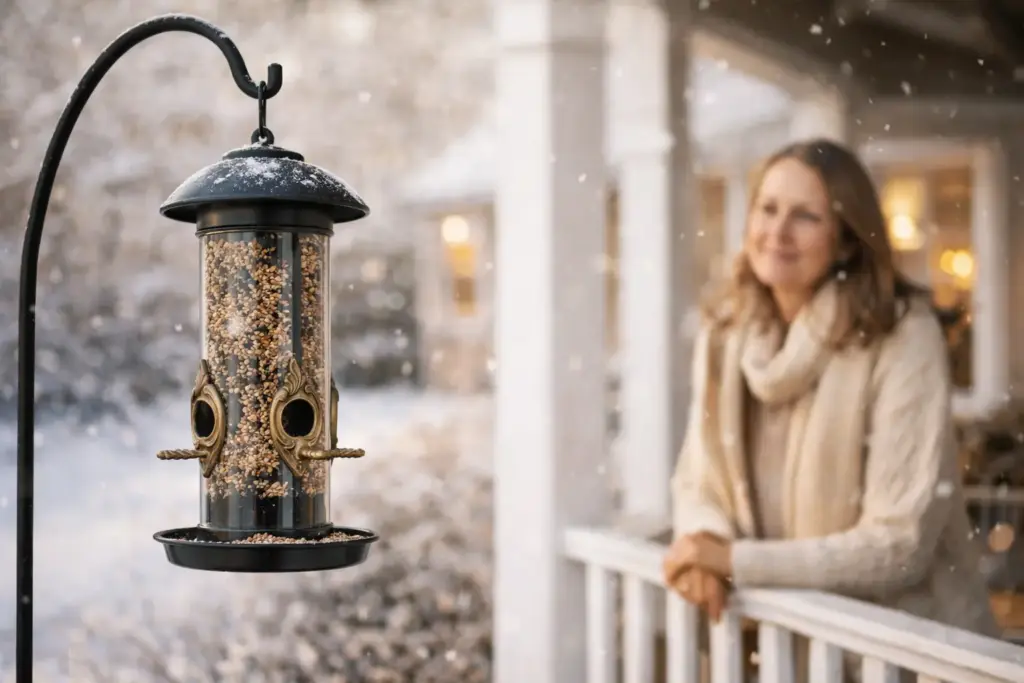
Tube models consist of hollow, cylindrical towers equipped with multiple feeding ports and perches. Modern seed capacities generally range from 0.5 lbs to 3.5 lbs depending on the height of the tube. Small clinging birds, like chickadees and finches, absolutely love them. They can easily grip the small metal perches. Tube feeding is effective for backyard setups if the habitat is at a mature tree stage with plenty of canopy cover. However, in the context of wide-open, treeless suburban lawns, this may not work because small birds feel too exposed to aerial predators like Cooper’s Hawks. When looking for the best bird feeders Canada shoppers can buy, demand eco-friendly poly-lumber derived from recycled plastics rather than cheap acrylics that snap off in January ice storms.
Hopper Feeders: Versatile and Spacious
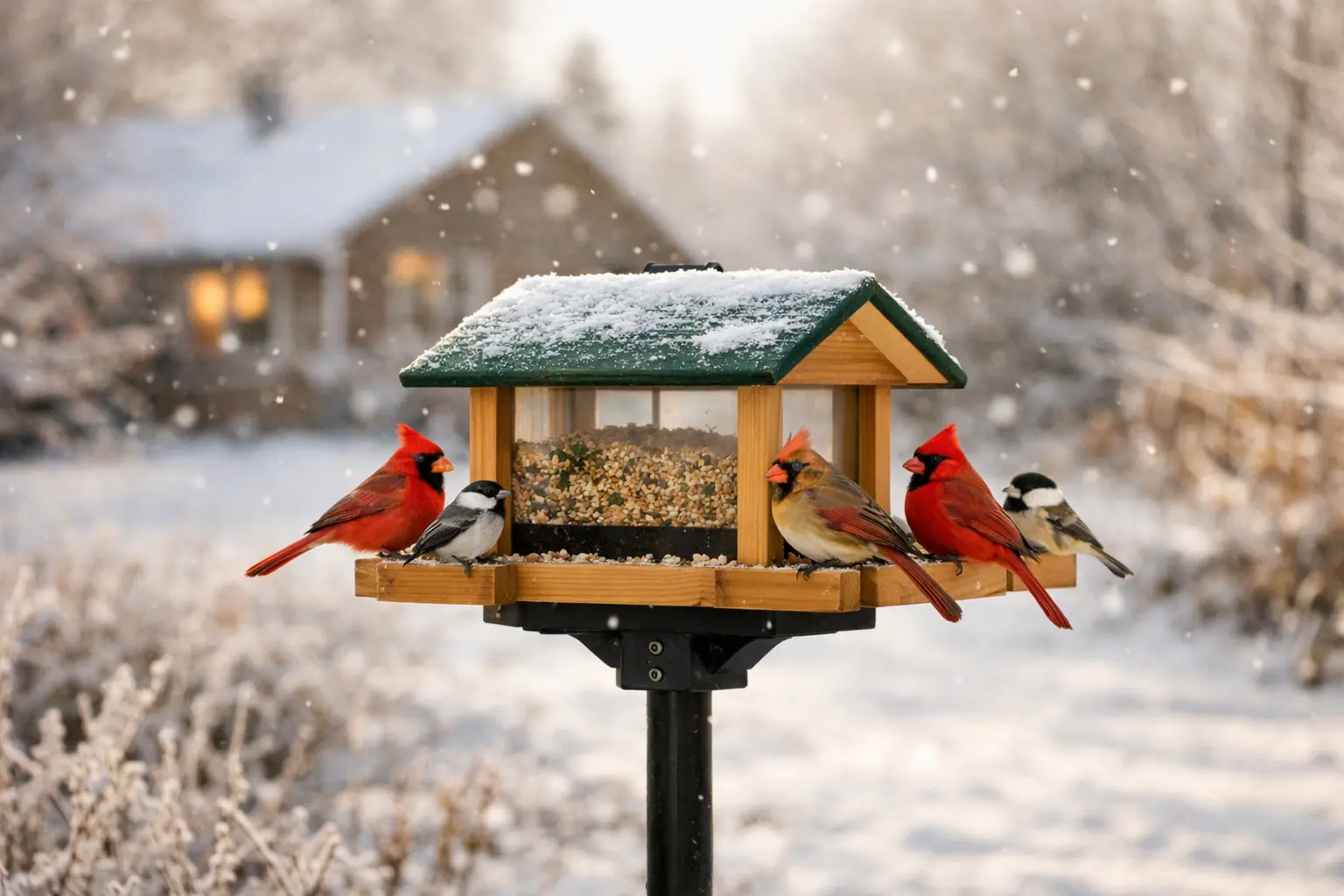
Hopper models look like miniature houses and hold massive amounts of seed. Hopper seed capacities typically range from 2 lbs to a whopping 15 lbs.
Tube feeders expose small birds; cedar hoppers provide critical blizzard shelter.
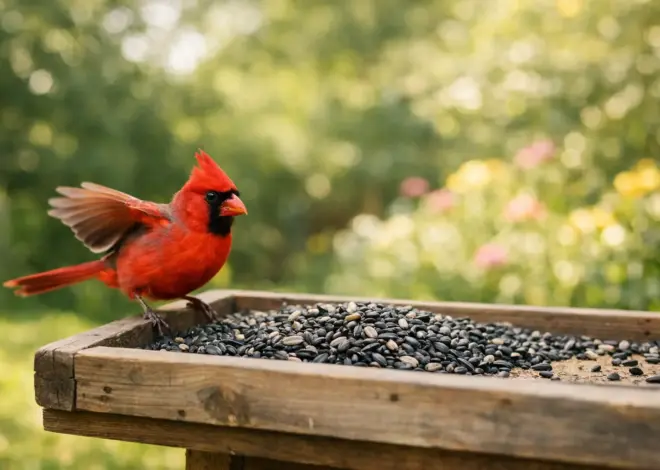
“We know that some regular feeder visitors, such as Northern Cardinals, are doing very well, because their populations are growing and ranges expanding.” — David Bonter, Citizen Science Director at the Cornell Lab of Ornithology.
These units are phenomenal for attracting those expanding cardinal populations because the birds have wide ledges to stand on. If you want the best bird feeders Canada winters can’t destroy, a solid cedar hopper with a copper roof is exceptionally tough to beat.
Platform Feeders: Open and Accessible
Platform or tray designs are exactly what they sound like: flat surfaces surrounded by a small raised lip. Dimensions usually range from 10×10 inches up to 24×24 inches. Ground-feeding birds prefer these open spaces because they don’t have to contort their bodies to extract seeds.
Here is a great visual breakdown outlining these basic feeding setups.
Many popular lee valley bird feeders incorporate open tray elements precisely because they mimic natural ground-foraging environments. Just ensure the tray features stainless steel mesh drainage. Otherwise, you will end up with a puddle of rotting mush after a heavy Pacific Northwest rainstorm.
Damp climates mold seed; stainless steel mesh drainage prevents fatal salmonella.
Specialty Feeders for Specific Bird Species
Sometimes, you need hyper-targeted hardware to attract specific visitors. Suet cages, nectar bottles, and peanut wreaths fit this bill perfectly. Suet blocks usually cost between $3 and $8 each, providing vital winter fat reserves. The best bird feeders Canada birders use for large pileated woodpeckers are almost always specialized tail-prop suet cages, which give the birds leverage to hammer at the fat blocks. For attracting hummingbirds specifically, offering a nectar bottle is effective, but potted plants that attract hummingbirds provide a more natural and sustainable food source, especially in warmer months.
Window Strike Prevention
Old-school window suction feeders are rapidly losing favor in the ornithological community due to high collision risks. Window feeding is effective for high-rise apartments if the glass is at a UV-treated stage. However, in the context of highly reflective suburban bay windows, this may not work safely without applying UV-reflective decals spaced strictly 2×2 inches apart.
Suction cups cause window strikes; UV-reflective decals guarantee safe high-rise birding.
Top Picks for Bird Feeders in Canada
Sorting through the massive inventory of outdoor garden products can feel incredibly overwhelming, especially with the influx of smart technology changing the market. To save you serious time, we narrowed down the absolute top contenders based on material durability, seed capacity, and weather resistance specifically suited for the northern climate.
Lee Valley Bird Feeders: Quality and Design
When discussing top-tier heritage hardware, lee valley bird feeders frequently dominate the conversation among purists. Their engineering focuses heavily on longevity rather than planned obsolescence. Many lee valley bird feeders feature powder-coated aluminum or sustainably sourced wood that fiercely resists rot.
| Feature Category | Budget Options | Premium / lee valley bird feeders | Verdict |
| Price Range | $15 – $35 | $85 – $250 | Premium saves money long-term. |
| Materials | Thin acrylic, glued plastic | Powder-coated steel, cedar | Heavy materials survive winter. |
| Squirrel Defense | Non-existent or weak baffles | Weight-calibrated closing ports | Budget fails against wildlife. |
| Tech Integration | None | Traditional mechanics | Buy once, cry once. |
This table clearly illustrates why paying a bit more upfront saves you massive headaches later on.
Best Budget Bird Feeders: Affordable Options
You don’t always have to spend a fortune to get started. Budget units typically range from $15 to $40. Are they the absolute best bird feeders Canada has ever seen? No, but they get the job done if you treat them gently.
- Standard Mesh Socks: Costing around $5 to $10, these are great for nyjer seed but tear easily if aggressive grackles attack them.
- Eco-Plastic Tubes: Good for beginners, though the plastic generally degrades under UV light within 18 to 24 months.
- Wire Suet Cages: Simple, cheap (usually $5), and highly effective for woodpeckers, though raccoons can easily pop them open.
- Basic Nectar Bottles: Ranging from $10 to $20, these require manual ant moats to keep pests out.
Premium Bird Feeders: High-End Choices
If you are entirely tired of replacing broken plastic every single spring, high-end models are waiting for you. Prices range heavily from $100 to $350. Choose wisely when shopping for the best bird feeders Canada retailers offer, as the premium market has completely split into mechanical and digital categories.
The Rise of Smart AI Feeders
Basic apps merely record; Bird Buddy AI instantly identifies backyard species.
Devices like the Bird Buddy or Netvue Birdfy feature 1080p AI-powered cameras that identify visiting species and send instant app notifications over a 2.4GHz Wi-Fi connection. Smart technology is effective for urban properties if the user is at a tech-savvy stage with strong router signals. However, in the context of remote off-grid cabins, this may not work at all.
Canadian Market Leaders: Brome Squirrel Buster
You cannot discuss premium Canadian hardware without mentioning Brome, a Quebec-based manufacturer. Their Squirrel Buster Plus uses a brilliantly calibrated mechanical shroud that drops under the weight of a red squirrel. They rival top-tier American brands like Droll Yankees in sheer durability.
Choosing the Best Bird Food to Attract Colorful Birds
Buying the hardware is only half the battle. If you load an expensive tube with cheap filler seed, you will only attract pigeons, starlings, and rats. You really need the best bird food to attract colorful birds if you want a vibrant visual display. Let’s look at the exact seed varieties and nutritional profiles required to bring vibrant species directly to your yard.
Understanding Bird Dietary Needs
Birds possess massive metabolic engines. In freezing Canadian temperatures, their daily caloric requirements can spike by 30% to 50%. They aren’t looking for junk food; they need high-fat, high-protein fuel to survive long, freezing nights. Providing the best bird food to attract colorful birds actually helps them survive cold snaps and breed successfully in the spring.
Best Seeds for Maximum Color
Generic seed attracts pests; Black Oil Sunflower guarantees vibrant cardinal populations.
To get the bright reds, vivid blues, and striking yellows, you need specific seeds from trusted local millers like Armstrong. The best bird food to attract colorful birds isn’t a generic mixed bag loaded with cheap milo and cracked corn.
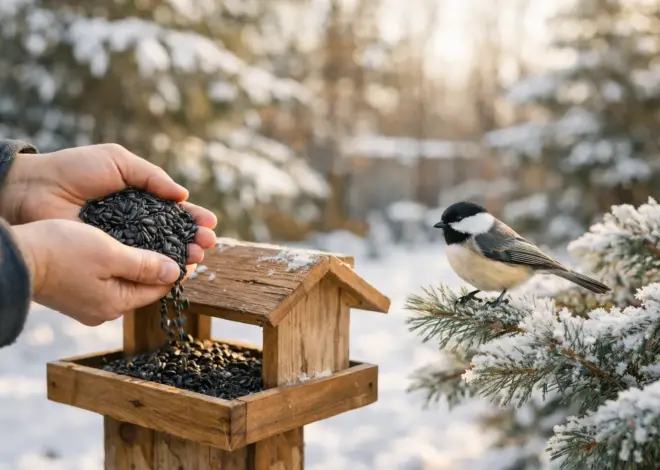
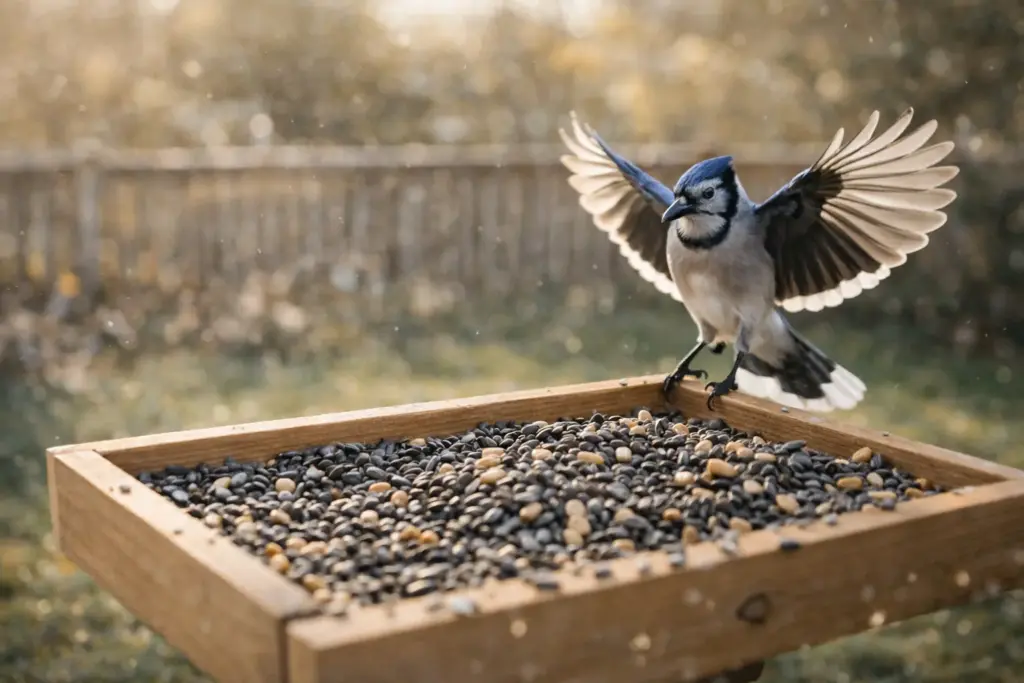
- Black Oil Sunflower Seeds: The undisputed king of seeds. Meat-to-shell ratios range from 60% to 70%, offering massive energy for cardinals and blue jays.
- Safflower Seeds: Cardinals absolutely love these hard white seeds, but squirrels and grackles generally hate the bitter taste.
- Nyjer (Thistle) Seeds: Tiny, oil-rich seeds that bright yellow goldfinches go crazy for. They require specialized tiny-port tubes.
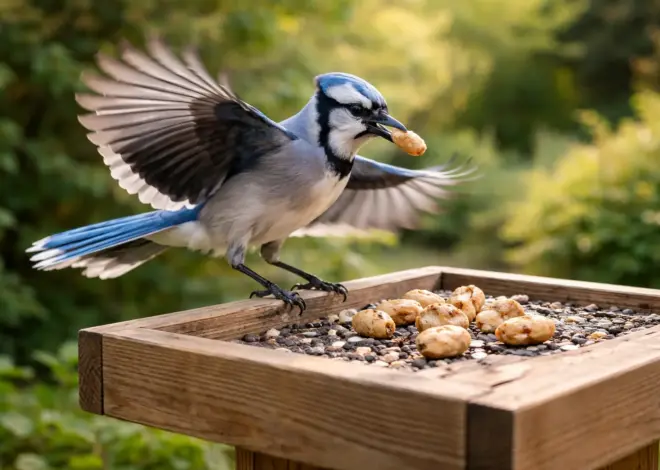
- Peanuts (Unsalted): High in fat and protein, these draw in colorful blue jays and various woodpeckers almost immediately.
Supplementary Foods to Enhance Attraction
Seeds are great, but supplements take your yard to the next level entirely. Suet is a crucial winter requirement. Winter calories prevent starvation; 80% fat suet provides essential avian fuel. Offering live mealworms is also the best bird food to attract colorful birds like eastern bluebirds during the spring breeding season. Additionally, offering orange halves is highly effective for migrating orioles in May, making fresh fruit the absolute best bird food to attract colorful birds during migration.
Installation and Placement Tips for Bird Feeders
You have got the hardware and the premium seed. Now, where exactly do you put it? Placement dictates whether you get a thriving bird paradise or a completely dead zone. Getting the most out of the best bird feeders Canada weather can throw at you requires strategic property mapping.
Stop guessing and start building. Installing a professional bird station in the Canadian frost requires precision. We’ve mapped out the exact 6-step sequence for a safe, squirrel-proof setup. Download this visual mounting map to take into your backyard—no more scrolling through articles while wearing winter gloves.

Optimal Locations for Bird Watching
You want to actually see the action, right? Viewing distances generally range from 10 to 15 feet outside your favorite living room window.
- Assess Window Hazards: Position the feeder closer than 3 feet or further than 30 feet from glass panes to prevent fatal collisions.
- Locate Natural Cover: Find a spot near a dense bush or mature coniferous tree (within 10 to 12 feet) so birds have an immediate escape route.
- Install the Pole System: Drive a heavy-duty steel pole at least 18 to 24 inches directly into the ground to prevent leaning.
- Mount the Baffle: Attach a metal squirrel baffle on the pole, measuring exactly 4.5 to 5.5 feet off the ground.
- Hang the Hardware: Secure the feeder on a sturdy, locking hook, ensuring it doesn’t swing wildly in heavy winter winds.
Safety Considerations for Birds
We absolutely have to protect our feathered guests. Avian disease spreads rapidly in crowded, dirty conditions. Many high-end units, like specific lee valley bird feeders, are purposefully designed to be easily dismantled for fast sanitizing.
Navigating Biosecurity and Avian Flu (H5N1)
According to the Canadian Wildlife Health Cooperative (2023), highly pathogenic avian influenza (HPAI) outbreaks occasionally require temporary feeder removals. Suspending feeding is effective for disease control if the region is at an active outbreak stage. However, in the context of isolated areas with zero reported cases, this may not work as a necessary precaution. Always monitor local CWHC alerts.
Municipal Bylaws and Wildlife Fines
Scattered seeds invite rats; suspended 10-foot stations comply with bear bylaws.
Feeding birds in bear country carries severe legal risks. Cities in British Columbia and Alberta frequently issue $500 municipal fines if your station attracts black bears. You must hang stations at least 10 feet high and suspend them between trees out of reach.
Maintenance and Cleaning Tips
A dirty feeding station is a literal death trap. You must scrub your equipment regularly. Cleaning solution ratios should range strictly from 1:9 to 1:10 (household bleach to warm water). Anything stronger leaves a toxic chemical residue; anything weaker doesn’t actually kill salmonella bacteria. Soak the plastic and metal parts for 10 to 15 minutes, scrub them with a stiff bristle brush, and let them air dry completely. This routine maintenance keeps the best bird feeders Canada models functioning flawlessly year after year.

Customer Reviews and Feedback on Bird Feeders
Marketing copy is one thing, but actual backyard performance is another entirely. We scrubbed through hundreds of detailed owner reports to see how these products actually hold up after enduring ice storms, raccoon attacks, and years of intense UV exposure.
Real User Experiences with Lee Valley Feeders
People who buy from heritage brands usually expect perfection. Feedback on lee valley bird feeders is overwhelmingly positive regarding long-term durability. According to Ecology & Evolution (2021, New York), evaluating visits to RFID-enabled bird feeders using video revealed highly specific visitation patterns based on design. Users consistently echo this science, noting that the thoughtful, deliberate design of lee valley bird feeders actively changes which species successfully visit their yards, favoring smaller songbirds over aggressive bully birds.
Comparing Top Brands Based on Customer Ratings
Customer satisfaction scores generally range from 3.8 to 4.8 out of 5 stars for most premium brands. These are the core metrics that define the best bird feeders Canada consumers trust.
- Weather Resistance: Customers love it when seed stays bone-dry during a three-day torrential downpour.
- Mechanical Reliability: Brome constantly wins head-to-head comparisons against Droll Yankees because their weight mechanisms don’t freeze shut in -20°C.
- Easy Refilling: Wide-mouth tops that don’t require funnels score huge points with elderly birders who have arthritis.
- Warranty Support: Hassle-free lifetime guarantees turn angry customers into incredibly loyal brand advocates instantly.
Common Complaints and How to Avoid Them
The biggest single complaint? Moldy, rotting seed. High-capacity seed storage is effective for rural locations if the feeding routine is at a high-volume stage. However, in the context of extremely humid, rainy coastal environments (like Vancouver Island), this may not work because the seed will mold before it’s eaten. Prairie users complain about shattered plastics at -30°C, while coastal users fight constant dampness. Match your material to your specific climate zone.

Where to Buy the Best Bird Feeders in Canada
Now that you know exactly what you need, it’s time to actually source it. Availability fluctuates wildly depending on the season, and shipping heavy metal hardware across the country isn’t always cheap. Here is where you should actually spend your hard-earned money.
Online Retailers: Convenience and Variety
Shopping online gives you instant access to the largest possible inventory, especially for hard-to-find Smart AI camera setups. Delivery times usually range from 2 to 7 business days across the provinces. You can quickly compare the best bird feeders Canada online stores have in stock without driving from garden center to garden center. Just verify their shipping policies regarding remote postal codes.
Local Stores: In-Person Shopping Experience
Sometimes, you just need to feel the product in your hands. Big box stores like Canadian Tire and Home Hardware carry decent mid-tier options. However, specialty shops like Urban Nature Store let you test the exact weight, springs, and mechanisms. You can walk right in and physically inspect the metal hinges on the newest lee valley bird feeders. Plus, local staff know exactly which localized seed blends work best.
Seasonal Sales and Discounts to Watch For
If you want to save cash, timing is absolutely everything. Off-season discounts typically range from 15% to 40%.
- Black Friday: Great for picking up expensive, squirrel-proof mechanisms at a fraction of the cost.
- Spring Garden Clearances: Perfect for grabbing the best bird food to attract colorful birds in bulk before the summer rush hits.
- End of Summer Sales: Ideal for stocking up on solar-powered smart tech at a steep discount.
- Boxing Day: The prime time to stock up on the best bird food to attract colorful birds for the harsh months ahead.
Frequently Asked Questions About Bird Feeders
Even with a complete, comprehensive guide, hyper-specific scenarios always pop up in the backyard. We have compiled the absolute most common questions people ask when setting up their outdoor stations. Let’s tackle these lingering doubts with straightforward, highly practical answers.
How to Prevent Squirrels from Accessing Feeders?
Here is an excellent visual guide on stopping these furry acrobats.
If you are tired of them eating everything, you have to invest in physical baffles. Baffle diameters should range strictly from 16 to 18 inches to be fully effective. The best bird feeders Canada birders rely on usually have weight-sensitive metal shrouds that drop down the second a squirrel lands, cutting off the food supply instantly.
What is the Best Time of Year to Set Up Feeders?
Can you start in the middle of winter? Yes, but it will take the local flocks a few weeks to actually find your new station. Autumn is technically the absolute optimal time to establish your yard as a reliable food source before the deep snow flies. That is exactly when you should deploy the best bird food to attract colorful birds to catch the southern migration.
How Often Should I Refill My Bird Feeder?
Does it have to be full every single day? No, unless you are hosting a massive, hungry flock of evening grosbeaks that drain a hopper in four hours. Refill cycles generally range from 2 to 5 days depending entirely on the hardware’s capacity and your local wildlife density. Don’t top off half-empty, wet seed; always empty the dregs first.
Do I need to take feeders down in summer?
Yes, but only if you live in an area with a high density of black bears that are actively emerging from hibernation and seeking easy calories.
Will bird feeding attract rats to my property?
No, unless you allow massive piles of discarded seed shells to accumulate on the ground beneath the station for weeks at a time without sweeping them up.
Gemini said
Investing in the best bird feeders Canada offers is more than a hobby; it’s a commitment to local wildlife conservation during our unforgiving winters. By selecting durable hardware like lee valley bird feeders and providing the best bird food to attract colorful birds, you transform a simple yard into a high-traffic avian sanctuary. Whether you prioritize high-tech AI monitoring or rugged mechanical durability, success lies in consistent maintenance and strategic placement. Start building your backyard habitat today to enjoy a vibrant, feathered spectacle all season long.
So, are you ready to completely transform your empty backyard into a thriving avian sanctuary this season?
Sources
- Bonter, D.N. and Greig, E.I. (2021). “Over 30 years of standardized bird counts at supplementary feeding stations in North America: A citizen science data report for Project FeederWatch.” Frontiers in Ecology and Evolution.
- Hughes, E., Mady, R.P., and Bonter, D.N. (2021). “Evaluating the accuracy and biological meaning of visits to RFID-enabled bird feeders using video.” Ecology & Evolution.
- Bailey, R.L. and Bonter, D.N. (2021). “Supplemental feeding of insect larvae increases mass of nestling Eastern Bluebirds.” Ornithological Applications / The Condor.
- Canadian Wildlife Health Cooperative (CWHC). (2023). “Highly Pathogenic Avian Influenza (HPAI) Guidelines for Backyard Bird Feeders.” CWHC National Reports.